
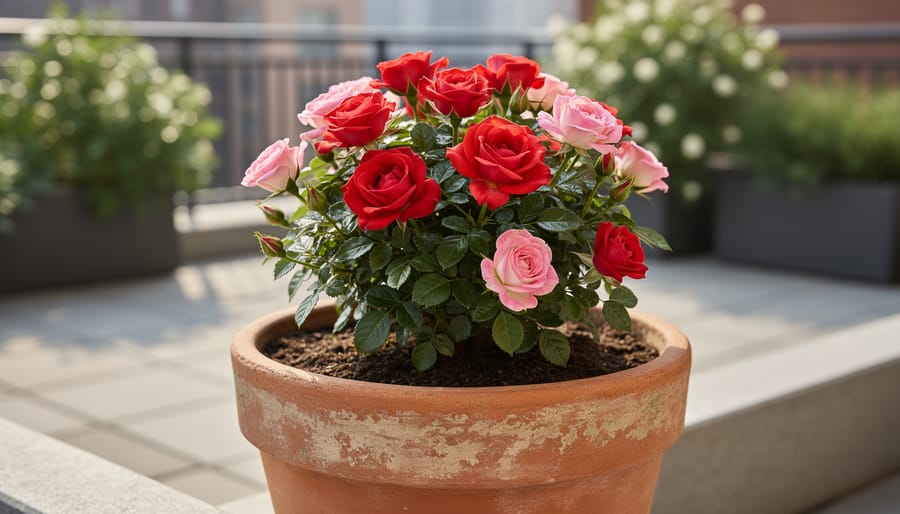
Miniature roses are true roses that naturally grow to a compact height of 6 to 24 inches, producing perfectly proportioned blooms and foliage at a fraction of the size of standard rose bushes. Despite their diminutive stature, these plants are fully hardy and deliver the same stunning beauty, fragrance, and color range as their full-sized cousins.
For gardeners working with limited space or those wanting rose beauty without the sprawling growth habit, miniature roses solve a very real problem. Whether you’re cultivating a balcony garden in Newburyport or adding color to a small urban patio, these compact roses fit where traditional varieties simply can’t. They thrive in containers, edge borders with elegance, and even flourish as indoor houseplants when given proper light.
The variety selection available in 2026 spans an impressive spectrum. You’ll find miniatures in every color imaginable, from classic reds and soft pinks to vibrant yellows, pure whites, and striking bi-colors. Growth habits range from low-spreading groundcovers to upright bushes and even miniature climbers that scale small trellises.
What makes miniature roses particularly appealing is their manageable care requirements combined with generous blooming cycles. Most varieties produce flowers continuously from late spring through fall, offering months of cutting material for tiny bouquets or delicate arrangements. Some gardeners even dry the petals for sachets and potpourri, making use of every bloom these productive plants generate.
This guide walks you through the most popular miniature rose varieties organized by color and growth habit, helping you select the perfect cultivars for your specific garden conditions and design goals.
What Miniature Roses Really Are
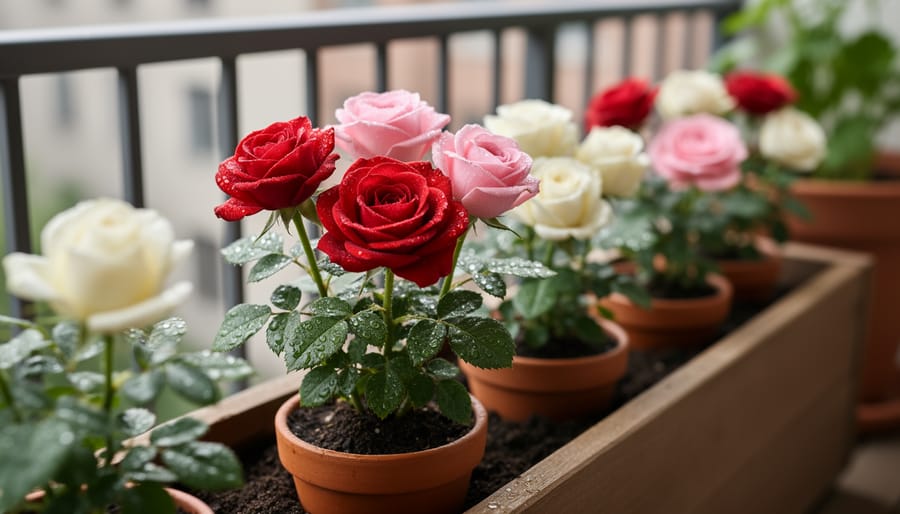
Miniature roses are true roses bred and cultivated to maintain a compact size throughout their lives, typically reaching 6 to 18 inches in height when fully grown. Unlike standard roses that have been pruned small or grafted onto dwarfing rootstock, miniatures are genetically programmed to stay petite, producing proportionally small flowers, leaves, and canes that create perfectly scaled-down versions of their larger cousins.
The defining characteristics that set miniature roses apart follow specific standards established by rose societies and growers:
- Classification
- Miniature roses must produce blooms under two inches in diameter and maintain a naturally compact growth habit without special pruning to qualify for the miniature designation.
- Bloom Size
- Individual flowers typically measure between half an inch to two inches across, appearing in proportion to the plant’s small stature and often displayed in clusters of three to five blooms.
- Plant Height
- Most varieties stay between 10 to 18 inches tall at maturity, though some micro-miniatures reach only 6 inches and certain climbers stretch to 24 inches while maintaining miniature-sized blooms.
- Growth Pattern
- These roses develop short internodes (the space between leaves on the stem), creating dense, bushy plants with compact branching rather than the long, reaching canes of standard roses.
What makes miniatures particularly appealing is their authentic rose character packed into a manageable size. They produce the same beloved rose-shaped blooms as their full-sized relatives, complete with multiple petals, classic form, and often delightful fragrance. The foliage is similarly scaled down, with small leaflets that maintain the familiar rose leaf shape. These aren’t simplified or less sophisticated plants, they’re complete roses in miniature form, offering the same range of colors, petal counts, and bloom styles you’d find in a traditional rose garden, just sized for smaller spaces and closer viewing.
How Miniature Roses Grow and Develop
Miniature roses pack the complete life cycle of a full-sized rose into a compact frame. After you plant miniature roses outside their fibrous root systems establish quickly, typically within two to three weeks under favorable conditions. These roots spread horizontally rather than diving deep, which is why they adapt so well to containers and shallow garden beds.
The growth pattern follows a predictable rhythm. New shoots emerge from the bud union in spring, developing leaves along short internodes, the stem segments between leaf nodes. While a hybrid tea might space these nodes three to four inches apart, miniature rose internodes measure just half an inch to an inch, creating the characteristic dense, bushy appearance.
Bloom production operates on a continuous cycle during the growing season. Each cane develops a terminal bud cluster within four to six weeks of new growth. As flower buds swell and open, the plant simultaneously generates fresh basal breaks, new shoots from the crown, ensuring constant renewal. This repeat-blooming habit means miniature roses can produce flowers from late spring through the first hard frost, often cycling through five or six flushes in a single season.
Their compact stature results from naturally compressed growth hormones, not environmental stress. The same auxins and cytokinins that regulate growth in standard roses function in miniatures, just with modified ratios that signal the plant to complete development at a smaller scale. Canes harden off and mature at eight to twelve inches rather than stretching to three feet, yet they’re proportionally just as strong.
Throughout the season, miniature roses require deadheading to redirect energy from seed production back into new blooms. Their fast metabolism means they process nutrients quickly, benefiting from regular feeding every three to four weeks. As autumn approaches, growth naturally slows, and the plants begin hardening off for winter dormancy, completing their annual cycle in perfect miniature.
Popular Miniature Rose Varieties for 2026
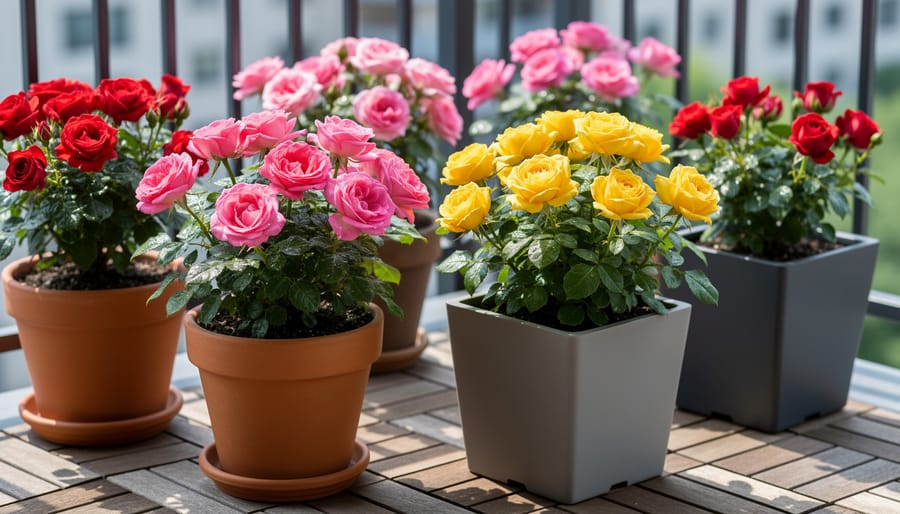
Classic Red and Pink Varieties
Red and pink miniature roses anchor most collections because they deliver classic rose beauty at a manageable scale. These colors feel timeless in gardens and containers, offering shades from deep crimson to soft blush that complement nearly any setting.
Among red varieties, ‘Ruby Ruby’ stands out for its velvety, true-red blooms that hold their color without fading to purple. ‘Little Artist’ brings drama with red-and-white bicolor petals, creating eye-catching contrast in small spaces. For those curious about the stories behind miniature rose names cultivars like ‘Scarlet Moss’ reveal their heritage, this one combines miniature form with the fuzzy, aromatic sepals characteristic of moss roses.
Pink selections range from the coral-pink ‘Jean Kenneally’ with exhibition-quality form to ‘Petite Pink’ with cheerful, pompon-style blooms that arrive in clusters. ‘Cupcake’ lives up to its name with perfectly rounded, medium-pink flowers that seem almost too perfect for such a compact plant.
These traditional colors remain popular because they photograph beautifully, pair well with other garden plants, and the blooms make lovely small-scale arrangements or petal crafts when spent.
Yellow, Orange, and Warm-Toned Miniatures
Yellow and orange miniature roses bring instant sunshine to any garden space, creating focal points that draw the eye and lift spirits even on cloudy New England days. These warm-toned varieties range from soft buttery yellows to deep golden hues and vibrant tangerine shades.
‘Rise ‘n’ Shine’ stands out as one of the most reliable yellow miniatures, producing bright lemon-yellow blooms that hold their color well without fading. The compact plants bloom continuously throughout the season, making them excellent for containers on patios or as edging along walkways. ‘Sun Sprinkles’ offers a softer approach with pale yellow flowers that almost glow in morning light.
For gardeners wanting warmth with more punch, ‘Orange Sunblaze’ delivers vivid orange-red blooms on hardy, disease-resistant plants. ‘Tiddly Winks’ provides a two-tone effect with coral-orange petals that fade to peachy-pink.
These warm colors pair beautifully with purple foliage plants or blue perennials, creating striking contrast combinations. In Newburyport gardens, yellow miniatures brighten shaded corners where red roses might get lost, while orange varieties make bold statements in full-sun beds.
White, Lavender, and Unique Color Varieties
If you’re drawn to softer palettes or something truly distinctive, miniature roses deliver with whites, lavenders, and striking multicolor combinations that stand apart from traditional hues.
White miniature roses like ‘Popcorn’ bring clean, crisp blooms that brighten shaded corners and pair beautifully with any color scheme. These varieties often produce abundant clusters of small, perfectly formed flowers that create an airy, elegant effect in containers or borders. White miniatures also make wonderful cut flowers and their petals work beautifully in craft projects like sachets or homemade potpourri.
Lavender and purple tones appear in varieties such as ‘Lavender Jade’ and ‘Winsome’, offering unusual shades rarely seen in full-sized roses. These cooler colors create calming focal points and photograph gorgeously in evening light.
For real visual drama, try bi-color or striped varieties. ‘Stars ‘n’ Stripes’ features bold red-and-white striped petals that never fail to spark conversation, while ‘Magic Carrousel’ presents white blooms edged in vibrant red. These novelty varieties add personality to any collection and prove that miniature roses can be just as adventurous as their larger cousins.
Climbing and Trailing Miniature Roses
While most miniature roses form compact bushes, some varieties stretch upward or cascade outward, giving you extra versatility in the garden. Climbing miniature roses can reach 3 to 6 feet, perfect for small trellises, arbors, or containers with support structures. They maintain miniature-sized blooms but produce longer canes that need gentle training. Popular climbers include ‘Jeanne Lajoie’ with its coral-pink flowers and ‘Work of Art’ featuring striped blooms in orange and yellow.
Trailing or ground-cover miniatures spread horizontally rather than climbing. These work beautifully spilling over retaining walls, hanging baskets, or container edges. Varieties like ‘Red Cascade’ and ‘Rainbow’s End’ (which also trails in containers) create flowing displays of continuous color. Their spreading habit makes them useful for covering slopes or filling wider spaces with minimal height.
These alternative growth habits don’t require more space than standard miniatures, just different support or placement. They open up vertical gardening possibilities even in small yards, and their compact root systems still suit container growing. You get the charm of miniature blooms with the drama of architectural plant forms.
Where and How to Use Miniature Roses
Miniature roses fit into almost any garden space, making them one of the most versatile rose types you can grow. Their compact size opens up possibilities that standard roses can’t match, from windowsill pots to pocket-sized garden beds.
Containers are where miniature roses truly shine. A single plant thrives in a pot as small as eight inches across, letting you create a portable rose garden on patios, balconies, or doorsteps. Group several varieties in mixed containers for continuous color, or line your deck railing with individual pots featuring different hues. Choose containers with drainage holes and use quality potting mix rather than garden soil. For those starting plants from scratch, proper indoor early growth care sets your miniatures up for strong performance once they move outdoors.
In-ground plantings offer equally creative options. Plant miniatures as border edging along pathways where you’ll appreciate their blooms up close. They work beautifully in front of taller perennials, filling gaps that larger roses would overwhelm. Rock gardens gain structure and color when you tuck miniatures between stones. Many New England gardeners in coastal areas like Newburyport use miniatures as low hedges that won’t block ocean views.
Miniature roses adapt to diverse garden roles:
- Container gardens on patios, balconies, and windowsills
- Low borders and edging along pathways or garden beds
- Indoor pots near bright windows during colder months
- Cutting gardens providing small-scale bouquets for tight spaces
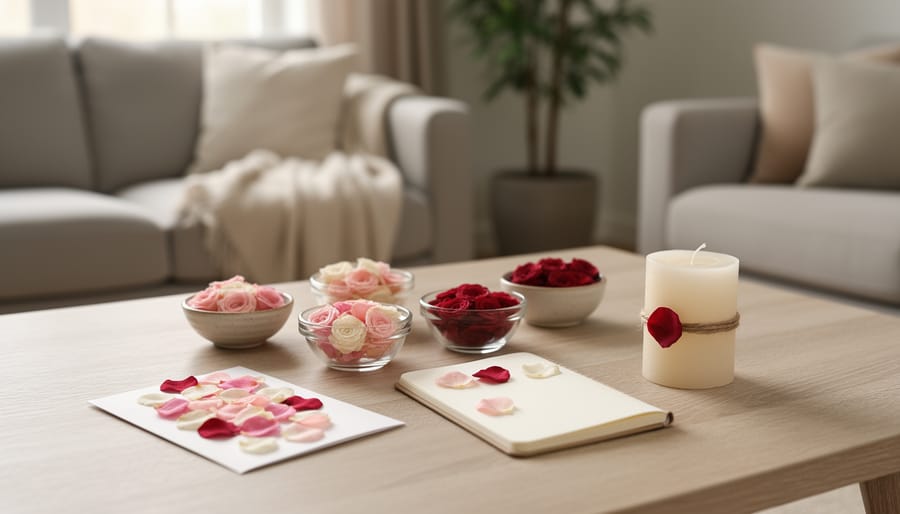
- Petal crafts including potpourri, rose water, and decorative confetti
- Companion plantings with herbs, perennials, or other compact plants
Indoor growing extends your rose season beyond summer. Place pots near south-facing windows where they’ll get at least six hours of bright light. Expect fewer blooms than outdoor plants, but the fragrance and color reward the effort during winter months.
The petals from miniature roses bring creative possibilities beyond the garden. Harvest blooms at peak opening for potpourri that captures summer’s scent. Dry petals for homemade rose water or sachets. Fresh petals make elegant cake decorations or natural confetti for celebrations. Because miniatures produce abundant small blooms, you can harvest regularly without diminishing the plant’s display, giving you plenty of material for craft projects.
These compact roses also pair well with other plants. Combine them with trailing herbs like thyme in mixed containers, or plant them alongside low-growing perennials that won’t compete for light. With thoughtful placement, miniature roses can transform even the smallest space into a rose garden showstopper that neighbors will notice.
Choosing the Right Variety for Your Garden
Selecting the right miniature rose starts with honest assessment of your growing conditions and goals. Here in Newburyport and throughout New England, winter hardiness matters most, look for varieties rated to USDA Zone 5 or colder if you want reliable repeat performance without elaborate winter protection. Varieties like ‘Rainbow’s End’ and ‘Gourmet Popcorn’ handle our climate beautifully.
Space dictates your options too. Containers suit every miniature rose, but if you’re planting in borders or beds, consider mature spread. Compact growers like ‘Sweet Chariot’ stay under twelve inches and work in tight spots, while spreading types need eighteen inches or more. Climbing miniatures require vertical support and more room to roam.
Experience level should guide your choices. Beginners do well with disease-resistant, vigorous growers that forgive inconsistent care, ‘Scentsational’, ‘Child’s Play’, and ‘Jean Kenneally’ all tolerate learning curves. More experienced gardeners might enjoy finicky exhibition types that reward careful attention with spectacular blooms.
Think about color schemes and what you want to achieve aesthetically. If you’re creating a romantic cottage garden, soft pinks and lavenders blend seamlessly with perennials. Bold reds and oranges anchor modern designs or provide focal points. Considering the meaning of 7 roses or other symbolic uses might influence your variety selections for special garden areas or gift plantings.
Finally, match bloom style to your vision. Single-petaled varieties offer simple charm and attract pollinators, while fully double blooms deliver classic rose elegance. Some gardeners prioritize fragrance; others want non-stop color regardless of scent. Your perfect variety balances all these factors with what you actually have to offer it.
Common Questions About Miniature Rose Varieties
Choosing the right miniature rose variety raises practical questions, especially if you’re new to growing these compact beauties. Here are answers to the most common concerns gardeners have when selecting and caring for miniature roses.
Are all miniature rose varieties equally hardy?
No, hardiness varies by cultivar. Most miniature roses are hardy in USDA zones 5-9, but some varieties tolerate colder winters better than others. Check the specific hardiness rating for each variety before purchasing, especially in New England climates.
Do miniature roses rebloom throughout the season?
Most modern miniature rose varieties are repeat bloomers, producing flowers continuously from late spring through fall with proper care. Regular deadheading and adequate feeding encourage more abundant reblooming.
Which miniature rose varieties are most fragrant?
Fragrance levels differ significantly among varieties. While many miniatures have lighter scent than full-sized roses, cultivars like ‘Sweet Chariot’ and some of the newer breeding lines offer surprisingly strong fragrance. Color doesn’t predict scent, read variety descriptions carefully if fragrance matters to you.
Are miniature roses good choices for beginning gardeners?
Yes, miniature roses make excellent starter plants. They’re generally more forgiving than hybrid teas, require less space, and respond well to container growing where you can control soil conditions. Start with disease-resistant varieties to build confidence.
Another question that comes up frequently concerns disease resistance. Newer miniature rose varieties have been bred specifically to resist common problems like black spot and powdery mildew, making them lower-maintenance than older cultivars. If you’re gardening in humid climates or prefer minimal spraying, seek out varieties described as disease-resistant or hardy.
Container size also puzzles new growers. A single miniature rose thrives in a pot at least 10-12 inches deep with adequate drainage. Larger varieties need proportionally bigger containers, while the tiniest micro-minis can manage in 6-8 inch pots. The key is matching pot size to the mature plant dimensions rather than assuming all miniatures need identical conditions.
With hundreds of miniature rose varieties available today, you have an incredible palette to work with, whether you’re drawn to classic reds, cheerful yellows, or those stunning lavender blooms that stop visitors in their tracks. The beauty of miniature roses lies not just in their compact size, but in their remarkable diversity and genuine garden toughness.
Starting your miniature rose journey doesn’t require expert-level skills or a massive garden. These plants reward even beginner gardeners with generous blooms and forgiving growth habits. Choose a variety that speaks to your aesthetic, match it to your growing conditions, and you’ll discover why so many gardeners become miniature rose enthusiasts.
Here in Newburyport and throughout New England, we’ve seen countless gardeners transform balconies, patios, and small yards into stunning rose displays using these versatile plants. At Nor-East Miniature Roses, we’re always excited to help you find varieties that will thrive in your specific space and bring you seasons of enjoyment. Your miniature rose adventure awaits, and it’s going to be beautiful.