

Yes, miniature roses are perennials. These compact beauties return year after year when grown in the right conditions, dying back in winter and reemerging each spring with fresh growth and blooms. Unlike annuals that complete their lifecycle in a single season, miniature roses establish a permanent root system that allows them to survive dormancy and thrive for many years.
Understanding that miniature roses are perennials changes everything about how you approach their care. When you plant them with permanence in mind rather than treating them as seasonal color, you’ll make better decisions about location, soil preparation, and winter protection. Here in Newburyport, where winters test the hardiness of even established roses, knowing the perennial nature of these plants helps gardeners choose varieties rated for our zone and implement proper mulching strategies.
The catch? Not all miniature roses behave equally as perennials. Their success depends heavily on climate zone, variety selection, and whether they’re grown in the ground or containers. Some miniature roses labeled as houseplants struggle outdoors in cold climates, while others bred for garden hardiness sail through harsh winters without fuss. This article breaks down how miniature roses function as perennials, which types offer the best long-term performance, and what care practices turn a one-season experiment into a decade-long garden relationship.
What It Means for Miniature Roses to Be Perennials
When gardeners call a plant “perennial,” they mean it lives for more than two years, returning each growing season from the same root system. Miniature roses fit squarely into this category, they’re woody shrubs with permanent root structures that survive winter and push out fresh growth when warm weather returns.
Understanding the three main plant lifecycle categories clarifies why miniature roses are perennials:
- Perennial
- A plant that lives for three or more years, with roots that survive winter dormancy and regenerate above-ground growth each spring. Most shrubs, trees, and many flowering plants fall into this category.
- Annual
- A plant that completes its entire lifecycle, germination, growth, flowering, seed production, and death, within a single growing season. Annuals must be replanted each year.
- Biennial
- A plant with a two-year lifecycle, typically producing foliage the first year and flowering in the second year before dying.
- Hardiness
- A plant’s ability to survive winter temperatures in a specific region, measured by USDA hardiness zones. Determines whether a perennial will reliably return year after year in your location.
- Dormancy
- A period of suspended growth when a plant conserves energy during unfavorable conditions, typically winter. Perennials enter dormancy seasonally and resume growth when conditions improve.
The confusion about miniature roses often stems from how they’re sold. You’ll frequently find them in garden centers marketed as gift plants in small pots, which leads people to assume they’re temporary like annual flowers. Others encounter miniature roses grown indoors, where they struggle without proper conditions and rarely survive long-term.
Here’s what makes them true perennials: miniature roses develop woody canes and deep root systems designed to last years. In appropriate climates, these roots survive freezing temperatures while dormant, then fuel new cane growth and abundant blooms season after season. They don’t need replanting, the same plant returns stronger each year, gradually maturing into a fuller, more productive shrub.
How the Miniature Rose Lifecycle Works
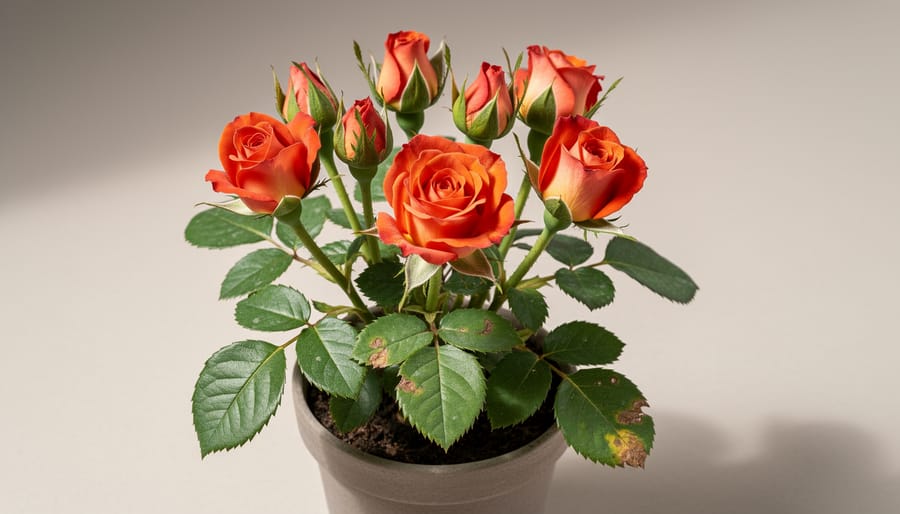
Spring Through Summer: Active Growth and Blooming
When temperatures warm in spring, miniature roses break dormancy and begin their most vigorous growth phase. New shoots emerge from the crown and established canes, quickly developing leaves and flower buds. Unlike many perennials that bloom once, miniature roses are repeat bloomers, they produce multiple flushes of flowers from late spring through the first frost.
This extended blooming period happens because miniature roses form flowers on new wood. After each bloom cycle finishes, the plant channels energy into producing fresh growth that carries the next round of buds. Throughout summer, with proper deadheading and feeding, miniature roses continuously generate new flowering stems. This productive phase is when the plant builds the root reserves and cane strength it needs to survive winter dormancy and return the following year.
Fall and Winter: Dormancy Period
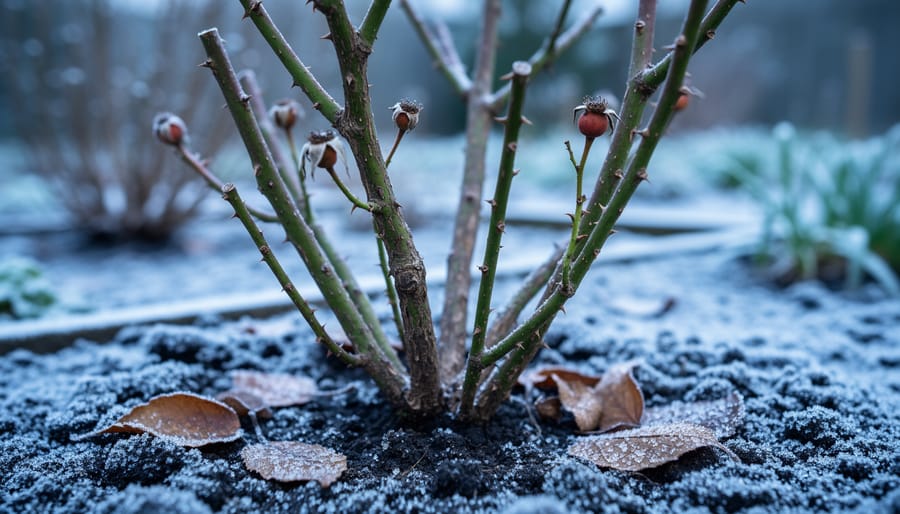
As autumn temperatures drop, miniature roses shift into dormancy, a natural resting phase that’s crucial to their perennial survival. You’ll notice the blooming slows, leaves may yellow and drop, and new growth stops as the plant redirects energy from foliage to root storage. The canes remain intact but become dormant, conserving resources to endure freezing temperatures. This dormancy isn’t death; it’s a protective strategy that allows the rose to survive winter and emerge strong in spring. The plant’s ability to withstand cold depends on its hardiness zones for winter survival typically USDA zones 5-9 for most miniature varieties. In colder regions like Newburyport, adding mulch around the base after the first hard frost insulates roots and helps ensure your miniature rose returns reliably each year.
Different Types of Miniature Rose Varieties and Their Hardiness
Not all miniature roses return with the same reliability each spring. The type you choose significantly affects how well it survives winter and thrives as a perennial in your climate.
Traditional Miniature Roses typically grow 12 to 18 inches tall and offer the widest selection of miniature rose varieties. Most are hardy in USDA zones 5 through 9, making them excellent perennial choices for much of the United States. In Newburyport, Massachusetts (zone 6b), traditional miniatures like ‘Pierrine’ and ‘Cupcake’ establish strong root systems that reliably survive winters with basic protection.
Micro-miniatures represent the smallest category, staying under 12 inches tall with proportionally tiny blooms. While charming, many micro-minis are less winter-hardy than their larger cousins. They often perform best as perennials in zones 6 and warmer, or require extra winter protection in colder areas. Their shallow root systems make them more vulnerable to frost heaving and temperature fluctuations.
Mini-flora roses bridge the gap between miniatures and standard floribundas, reaching 18 to 24 inches with slightly larger blooms. Many mini-floras show excellent cold hardiness, with some varieties surviving in zone 4 with proper care. ‘Rainbow’s End’ and ‘Gourmet Popcorn’ are particularly robust in New England gardens.
Here are key hardiness considerations for each type:
- Traditional miniatures: hardy zones 5-9, best all-around perennial reliability
- Micro-miniatures: hardy zones 6-9, may need container overwintering in colder areas
- Mini-floras: hardy zones 4-9, often the most cold-tolerant option
- Own-root varieties: generally hardier than grafted roses, better winter survival
- Container-grown roses: may be less hardy initially, need season to establish roots
Your local climate matters more than variety type alone. A micro-mini thriving in a protected coastal Massachusetts garden might struggle just miles inland where temperatures drop lower. Always check the specific hardiness rating for any variety you’re considering, and give new plantings their first winter with mulch protection regardless of their rated zone.
Climate and Hardiness Zone Considerations
While miniature roses are perennials by nature, whether they successfully return year after year depends heavily on your local climate. The USDA hardiness zone system provides the most reliable framework for predicting success. Most miniature rose varieties are hardy in zones 5 through 10, but specific cultivars vary. Check your exact zone and compare it to the hardiness rating on the variety tag before assuming a particular miniature rose will survive your winters.
In zones 7 and warmer, miniature roses typically overwinter outdoors with minimal intervention. The roots remain protected by natural soil insulation, and the plants reliably return each spring. Gardeners in these regions can treat miniature roses much like other hardy perennials, perhaps adding a light mulch layer for extra protection during occasional cold snaps.
Zones 5 and 6 present more challenges. Here in colder regions like Newburyport, Massachusetts (zone 6b), miniature roses need deliberate winter preparation to survive as perennials. Apply a 4- to 6-inch mulch mound around the base after the first hard freeze to insulate the root zone and lower canes. Some gardeners add rose cones or burlap wraps for additional protection. Even with these measures, expect some cane dieback; the plant returns from protected buds near the base rather than maintaining all top growth.
Container-grown miniature roses face different dynamics. Pots expose roots to temperature extremes that in-ground plants avoid. In zones 6 and colder, containers need either moving into an unheated garage or shed for winter, or burying pot and all in a garden bed for insulation. Leaving containers exposed outdoors often kills the roots despite the variety’s labeled hardiness because the rating assumes ground planting.
If you garden in zone 4 or colder, growing miniature roses as true perennials becomes difficult. Many gardeners in these zones either treat them as annuals or commit to extensive winter protection measures that may still result in losses.
Caring for Miniature Roses as Perennials
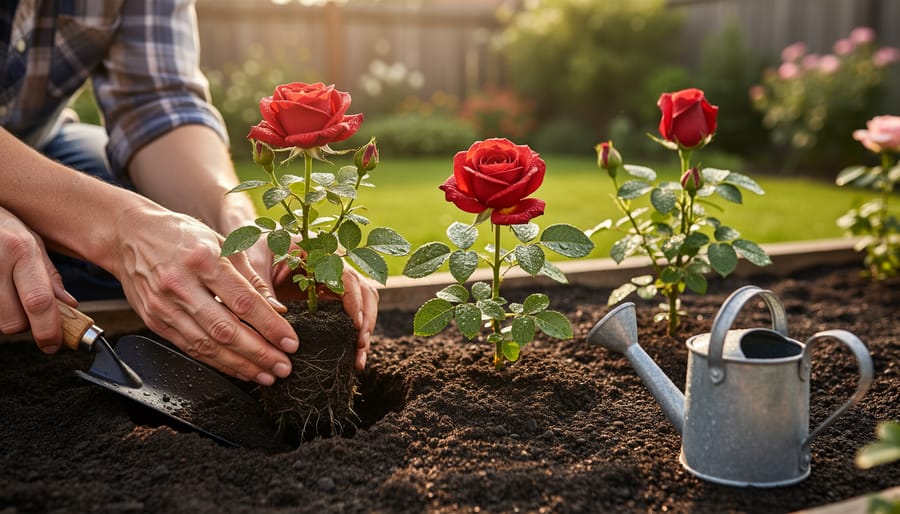
Understanding that miniature roses are perennials changes how you approach their care. These plants need consistent attention to thrive year after year, not the one-season-and-done mindset of annuals.
Start with the foundation: planting outside requires setting the bud union (the swollen area where canes meet roots) one to two inches below soil level in cold climates. This depth protects the graft point during winter freezes, which is essential for perennial survival. In warmer zones (7 and up), you can plant at soil level.
Mulching becomes crucial for perennials. Apply two to three inches of organic mulch around the base each spring to conserve moisture and regulate soil temperature, then add an extra layer in late fall for winter insulation. This differs from annuals, which won’t need that dormancy protection.
Pruning timing matters more with perennials. Remove dead or damaged canes in early spring when new growth appears, and deadhead spent blooms throughout the growing season to encourage repeat flowering. Don’t prune in fall, which can stimulate tender new growth before winter.
Fertilize differently than you would annuals. Feed miniature roses every four to six weeks during active growth (spring through early fall), stopping by late August to let plants harden off before dormancy. A balanced rose fertilizer works well; slow-release formulas reduce the feeding frequency.
Winter preparation in zones 6 and colder involves mounding six to eight inches of soil or mulch around the base after the ground starts freezing but before it freezes solid. Remove this protective mound gradually in spring once hard frosts pass. Container-grown miniature roses need moving to an unheated garage or burying pot and all in a sheltered garden spot.
Common Questions About Miniature Roses as Perennials
Gardeners regularly encounter similar concerns when growing miniature roses as perennials. Understanding these common questions helps you set realistic expectations and troubleshoot problems when they arise.
How long do miniature roses typically live as perennials?
With proper care, miniature roses commonly thrive for 10-15 years or longer, producing abundant blooms each season. Their longevity depends on climate conditions, winter protection, and consistent maintenance throughout their growing years.
Are indoor miniature roses perennials?
Indoor miniature roses remain the same perennial plants, but they rarely experience true dormancy without seasonal temperature changes. This continuous growth cycle eventually exhausts them, so most indoor roses benefit from a transition outdoors after their first blooming period or require indoor early care strategies to extend their productive life.
What should I do if my miniature roses don’t return in spring?
Wait until late spring before giving up, as roses sometimes emerge later than expected. If canes remain green inside when scratched, the plant may still recover with patience and regular watering, though severely winter-damaged roses often need replacement.
Do miniature roses need replanting every few years?
Established miniature roses don’t require replanting and actually resent root disturbance. They’ll continue returning in the same location for many years, though you might divide overcrowded clumps or refresh surrounding soil every 5-7 years to maintain vigor.
These questions reflect real uncertainties gardeners face. The key takeaway: miniature roses are legitimate perennials that return reliably when matched to appropriate climates and given attentive seasonal care, but they’re not indestructible and do have limits based on their growing environment.
Yes, miniature roses are perennials that will grace your garden year after year when you provide proper care and suitable growing conditions. Understanding their perennial nature transforms how you approach their cultivation, from initial planting depth to winter protection strategies. The reward comes each spring when those seemingly lifeless canes push out fresh growth, proving that your efforts through the previous season have paid off.
For gardeners in regions like Newburyport, Massachusetts, and similar climates, selecting hardy varieties and protecting roots through winter makes the difference between fleeting annual color and a lasting investment. These compact roses offer the same resilience as their full-sized cousins, just in a smaller package that fits more gardens and lifestyles.
Beyond their ornamental value, the petals from your perennial miniature roses can be dried for potpourri, infused into oils, or crystallized for cake decorations. Each bloom represents not just this year’s effort but the culmination of seasons of growth. Whether you’re starting your first miniature rose or expanding an established collection into a showstopper garden understanding their perennial lifecycle gives you the foundation for long-term success.