• DIY
  • How to Plant Miniature Roses Outside for Long-Term Success

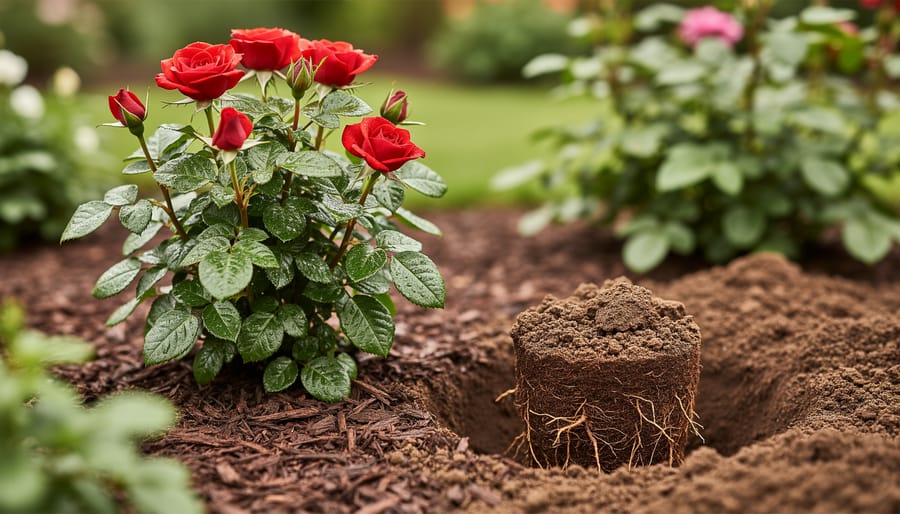
    Miniature rose plant freshly planted outdoors in a sunlit garden bed with surrounding green foliage and prepared soil.

    Planting miniature roses outside is a straightforward process that takes about 30 minutes per plant and transforms container-grown beauties into permanent garden residents. The key is timing your transplant after the last frost, preparing a sunny location with well-draining soil, and giving roots room to spread in a hole twice the width of the root ball. This transition works best when your miniature roses have established strong indoor growth (if you started them indoors, follow these care indoors f Read more..

  • Care
  • How to Care for Miniature Roses Indoors During Early Growth: First Steps to Strong, Healthy Plants

    Growing miniature roses indoors successfully requires consistent bright light (at least six hours daily), careful watering that keeps soil moist but never waterlogged, and temperatures between 60-75°F. These compact beauties, standing just 6-18 inches tall, bring the charm of full-sized roses to windowsills and tabletops throughout Newburyport homes, rewarding attentive care with blooms you can later use in everything from potpourri to miniature floral arrangements.
    If you’ve just brought home your first miniature rose, you’re likely feeling both excited and slightly anxious about keeping it alive. The good news? These Read more..

  • Growing Miniature Roses
  • What Is the Meaning of 7 Roses (and What Does It Symbolize)?

    “Close-up of seven deep-red roses in a hand-tied bouquet on a rustic wooden table with soft garden background.”

    Seven roses carry a distinct romantic message: “I’m infatuated with you.” This number sits in the sweet spot between casual interest and full commitment, making it a thoughtful choice when your feelings have deepened beyond friendship but you’re not quite ready to declare eternal love with a dozen red blooms.
    Understanding what seven roses communicate matters because the number of roses you give speaks as loudly as the color. While a single rose suggests love at first sight and a dozen declares complete devotion, seven roses reveal that you’re captivated and thinking seriously about someone. The symboli Read more..

  • Care
  • Why Every Rose Gardener Needs the Right Gardening Scissors in 2026

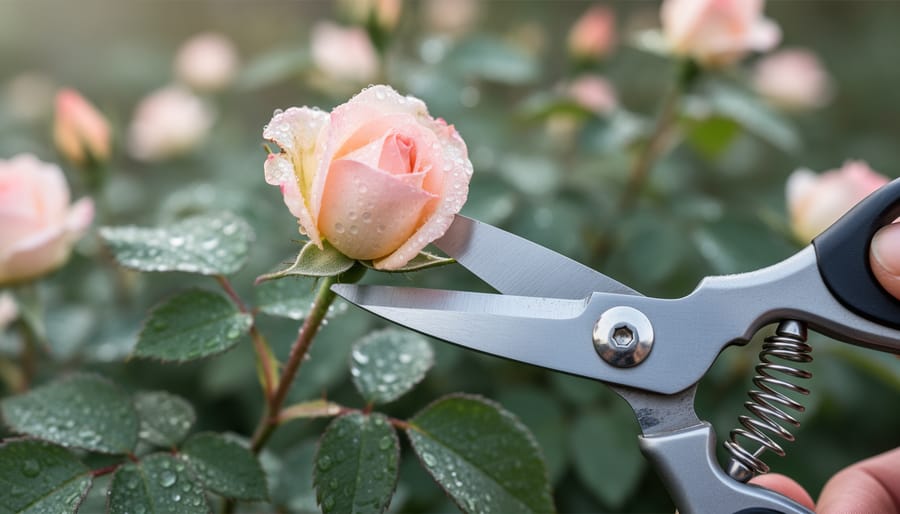
    Close-up of gardening scissors trimming a miniature rose bloom with soft coastal daylight and blurred rose foliage in the background.

    Precision cutting makes all the difference when you’re working with delicate blooms and tender stems. Gardening scissors are the secret weapon of successful miniature rose care offering controlled snips that shears and pruners simply can’t match. These specialized tools feature short, sharp blades designed for intricate work in tight spaces where larger cutting tools would damage neighboring buds or crush fragile growth.
    Think of gardening scissors as the scalpel of your tool collection. While bypass pruners excel at thicker canes, scis Read more..

  • DIY
  • Grow a Garden of Stocks That Bloom Year After Year

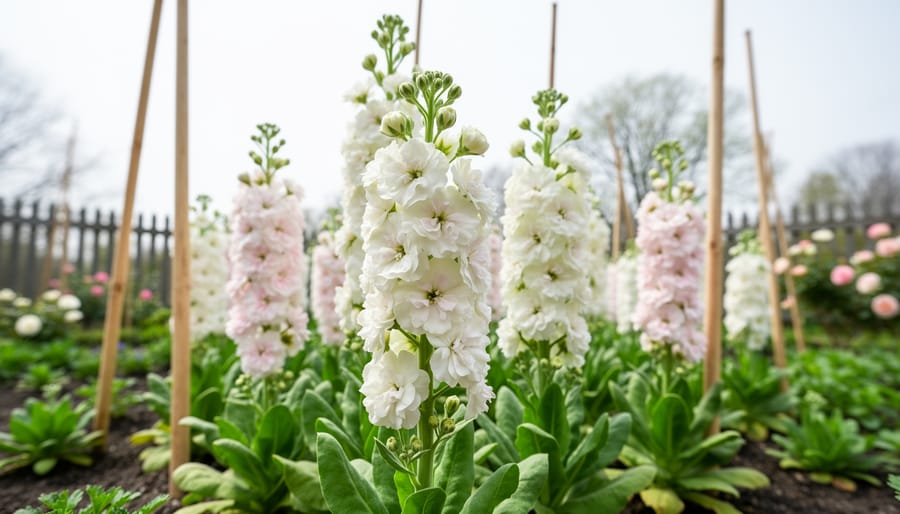
    “Tall stock flowers (Matthiola) with ruffled blooms in an early spring garden, supported by wooden stakes with miniature roses in the blurred background.”

    Stock flowers (Matthiola) have captivated gardeners for centuries with their intoxicating fragrance and towering spikes of ruffled blooms. Here in Newburyport, these old-fashioned beauties transform spring gardens into perfumed wonderlands, standing tall alongside companion plants and creating vertical interest that rivals even our prized roses.
    Growing stocks successfully requires understanding their cool-season preferences and providing proper support as they reach heights of 24 to 36 inches. These Mediterranean natives thrive in temperatures between 50-65°F, making them perfect for early spring planting in our New England climat Read more..

  • Growing Miniature Roses
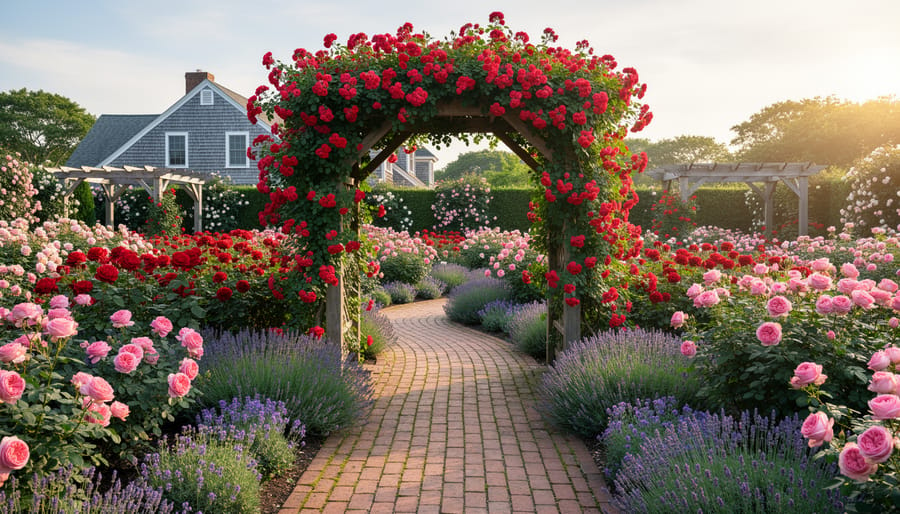
  • Transform Your Rose Garden Into a Showstopper This Season

    Eye-level view of a New England rose garden with a climbing rose covering a wooden arbor, layered hybrid teas and floribundas, miniature edging, and lavender, catmint, and salvia along a curved brick path in warm morning light, with a shingled house and pergola softly in the background.

    Position your rose garden where it receives at least six hours of direct sunlight daily, preferably morning sun to dry dew from leaves and prevent disease. Create a focal point using a climbing rose on an arbor or trellis as your centerpiece, then arrange hybrid teas and floribundas in curved borders or geometric beds radiating outward. Layer plants by height with grandifloras at the back, compact varieties in the middle, and miniature roses edging the front to establish depth and visual interest.
    Select roses suited to New England’s climate, choosing cold-hardy varieties rated for USDA Zone 6 or lower that can withstand Newbu Read more..