
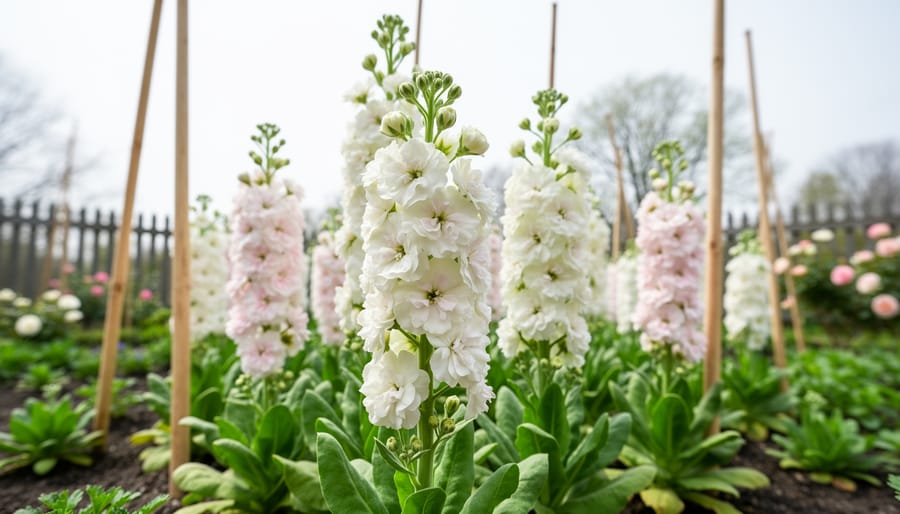
Stock flowers (Matthiola) have captivated gardeners for centuries with their intoxicating fragrance and towering spikes of ruffled blooms. Here in Newburyport, these old-fashioned beauties transform spring gardens into perfumed wonderlands, standing tall alongside companion plants and creating vertical interest that rivals even our prized roses.
Growing stocks successfully requires understanding their cool-season preferences and providing proper support as they reach heights of 24 to 36 inches. These Mediterranean natives thrive in temperatures between 50-65°F, making them perfect for early spring planting in our New England climate. When their tall stems begin to lean under the weight of those glorious flower clusters, gardening sticks become essential tools for keeping your display upright and stunning.
The real magic happens when you select the right varieties for your space. Column stocks offer single stems perfect for cutting gardens, while branching types create fuller displays in borders. Ten Week stocks bloom fastest, while Brompton varieties overwinter in milder zones for earlier spring flowers. Each type brings something special to your garden palette.
Whether you’re planning a dedicated cutting garden or tucking stocks between your miniature roses for companion planting benefits, these fragrant powerhouses deserve a spot in your 2026 garden plans. Their petals, like rose petals, can be dried for potpourri or sachets, extending their aromatic gift well beyond the blooming season.
Let’s explore exactly how to cultivate these spectacular flowers from seed to full bloom, ensuring your garden stocks reach their magnificent potential.
Why Stock Flowers Deserve a Place in Your Garden
Stock flowers bring layers of sensory delight that few annuals can match. Their spicy-sweet fragrance carries across the garden on warm evenings, filling the air with a perfume that rivals the finest roses. A single planting can scent an entire patio or entryway, making them invaluable for outdoor living spaces.
The blooms themselves last remarkably well, both in the garden and as cut flowers. Where many annuals fade after a few days, stock flower spikes hold their color and form for two weeks or longer in arrangements. In the garden, they continue flowering for months when deadheaded regularly, providing continuous color from late spring through fall in favorable conditions.
Color choices span the spectrum from pure white and soft pastels to deep purple and burgundy. This range makes stocks wonderfully versatile for any color scheme. Plant white varieties near miniature roses in cream or blush tones for an elegant monochromatic border. Or pair magenta stocks with pink roses for bold, eye-catching contrast.
Their upright growth habit creates vertical interest that complements the rounded form of miniature roses perfectly. Stocks typically reach 18 to 24 inches tall, ideal for mid-border placement where they won’t overshadow smaller plants yet still make a statement. The columnar flower spikes draw the eye upward, adding dimension to flat plantings.
In Newburyport gardens, stocks thrive in our cool spring weather and moderate summer temperatures. The coastal climate suits them beautifully, as they prefer temperatures between 60 and 70 degrees. Unlike heat-loving annuals that struggle in our maritime conditions, stocks actually perform better here than in sweltering inland gardens.
They’re also relatively forgiving plants. While they appreciate rich soil and consistent moisture, they tolerate less-than-perfect conditions better than their delicate appearance suggests. This resilience makes them excellent choices for busy gardeners who want impressive results without constant fussing.
Choosing the Right Stock Varieties for 2026
Selecting the right stock varieties sets the foundation for a fragrant, colorful garden that thrives in your specific climate. The diversity among stock cultivars means you can tailor your choices to match your bloom schedule preferences, available space, and regional growing conditions.
Column stocks stand as the most popular choice for cut flower enthusiasts and gardeners who want dramatic vertical interest. These tall varieties typically reach 24 to 36 inches, producing dense flower spikes packed with blooms in shades ranging from pure white and soft pink to deep purple and burgundy. Their sturdy, single-stem growth habit makes them ideal candidates for support with gardening sticks, especially in windy coastal areas like Newburyport.
Ten-week stocks earned their name from their rapid ten-week stock growth timing from seed to bloom, making them perfect for gardeners who want quick results. These compact varieties generally stay between 12 and 18 inches tall, fitting beautifully in mixed borders alongside miniature roses. Their branching habit produces multiple flower stems per plant, extending the bloom period when you deadhead regularly.
Biennial stocks, sometimes called Brompton stocks, follow a different schedule. Plant them in late summer or early fall, and they’ll overwinter as vegetative rosettes before blooming spectacularly the following spring. These varieties deliver the most intense fragrance and often survive mild winters in zones 7 and warmer.
| Variety Type | Bloom Time from Sowing | Height Range | Best for Zones |
|---|---|---|---|
| Column Stocks | 10-12 weeks | 24-36 inches | 3-10 (cool season annual) |
| Ten-Week Stocks | 10 weeks | 12-18 inches | 3-10 (cool season annual) |
| Biennial Stocks | Overwinter, spring bloom | 18-30 inches | 7-10 (overwinter) |
| Dwarf Stocks | 8-10 weeks | 8-12 inches | 3-10 (containers, edges) |
Climate zone plays a crucial role in timing your plantings. Northern gardeners in zones 3-6 should start seeds indoors six to eight weeks before the last frost date, while southern growers can direct-sow in fall for winter and early spring blooms. Stocks perform best in cool conditions between 50-65°F, so choose varieties that align with your coolest growing windows, spring in the North, fall through winter in warmer regions.
For New England gardens, focus on column and ten-week varieties planted in early spring for late May through July blooms, when they’ll complement your miniature roses perfectly.
Preparing Your Garden Bed for Stock Success
Start by selecting a site that receives at least six hours of direct sunlight daily. Stocks thrive in bright conditions and produce more abundant blooms when they aren’t competing for light. In New England gardens, south-facing or west-facing beds work particularly well, offering protection from harsh northern winds while maximizing sun exposure during our shorter growing season.
Test your soil pH before planting, aiming for a range between 6.5 and 7.5. Stocks tolerate slightly alkaline conditions better than acidic soil, so if your test shows a pH below 6.0, work in garden lime several weeks before planting. Many Newburyport-area soils lean naturally acidic, so this adjustment often proves necessary. If you’ve already mastered the right way to grow miniature roses, you’ll find stocks appreciate similar pH levels, making companion planting straightforward.
Drainage matters more than most gardeners realize. Stock prefers good drainage and cannot tolerate waterlogged roots, which quickly lead to rot and disease. Work three to four inches of compost into your bed, along with coarse sand if your soil has heavy clay content. Raised beds offer an excellent solution for areas with persistent drainage issues, particularly in low-lying coastal properties where spring rains saturate the ground.
Till the bed to a depth of ten to twelve inches, breaking up compacted soil and removing rocks, roots, and debris. This deep preparation encourages strong root development, which directly supports the tall stems stocks produce. Rake the surface smooth, creating a level planting area that won’t allow water to pool.
Finally, apply a balanced granular fertilizer at half strength two weeks before planting. This gives nutrients time to integrate into the soil without overwhelming young transplants with excessive nitrogen, which promotes leaf growth at the expense of those fragrant blooms you’re working toward.
Planting and Supporting Stocks with Gardening Sticks
Staking Techniques for Maximum Support
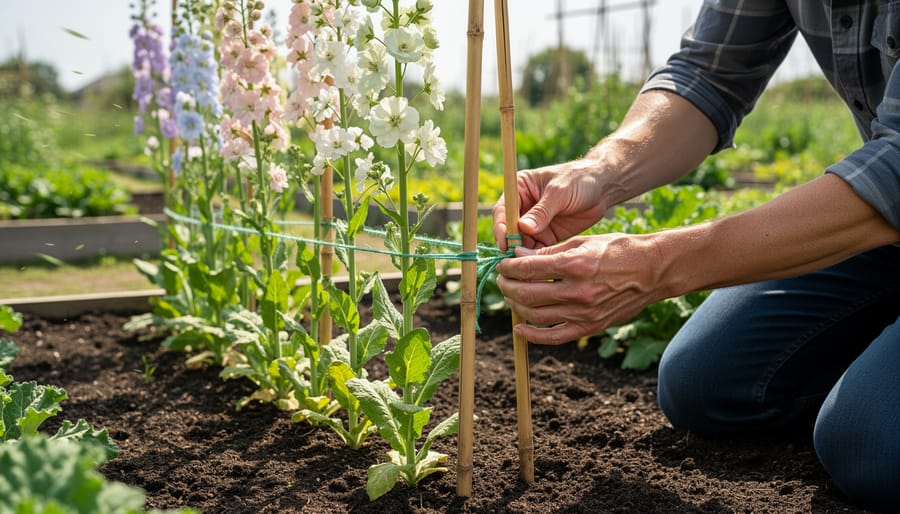
Installing stakes at planting time prevents root damage and gives your stocks the structural foundation they need from the start. Drive bamboo stakes 6-8 inches deep into the soil, positioning them 2-3 inches from each plant. For column stocks that reach 24-30 inches tall, use stakes that extend at least two-thirds of the expected mature height.
Single-stem supports work beautifully for individual plants. Insert one stake per plant and secure the stem with soft garden twine or fabric ties at 8-10 inch intervals as the stock grows. Loop the tie around the stake first, then loosely around the stem in a figure-eight pattern. This technique allows stems to sway slightly in wind without snapping while maintaining their upright position. The same principles apply to early growth care for many garden plants, establishing proper support before stems become thick and rigid.
For massed plantings, create a perimeter support system using stakes at the corners with twine woven horizontally between them at different heights. Add stakes every 18-24 inches along longer rows. This grid supports multiple plants simultaneously and creates an almost invisible framework once stocks fill in with foliage and blooms.
Check ties weekly during active growth periods. Adjust them before they constrict stems, and add new ties as plants gain height. Coastal winds in areas like Newburyport can be particularly strong, so reinforce stakes after storms and replace any that have loosened. Proper staking transforms potentially floppy stems into proud, vertical displays that showcase stocks’ spectacular flower spikes from ground level to their fragrant, colorful crowns.
Essential Care Throughout the Growing Season
Stock flowers thrive with consistent attention through the growing season, and following garden care basics similar to those used for miniature roses will keep your plants blooming vigorously. Water deeply once or twice weekly rather than frequent shallow watering, ensuring the soil remains evenly moist but never waterlogged. In Newburyport’s coastal climate, morning watering prevents fungal issues by allowing foliage to dry before evening’s cooler temperatures arrive.
Feed your stocks every two to three weeks with a balanced liquid fertilizer diluted to half strength. This steady nutrition schedule supports continuous blooming without forcing excessive leaf growth that can make plants top-heavy. Switch to a phosphorus-rich fertilizer once buds appear to encourage more abundant flowers.
Deadheading spent blooms redirects energy into producing new flower spikes rather than seed formation. Pinch or cut faded flowers just above the next set of leaves, and you’ll often see secondary blooms emerge within weeks. This practice extends your flowering season from early summer well into fall, mirroring the later stage care techniques that keep miniature roses performing their best.
A weekly maintenance routine keeps problems at bay:
- Check soil moisture two inches deep and water if dry
- Inspect leaves and stems for aphids or caterpillars
- Remove any yellowing lower leaves
- Verify stakes are secure and adjust ties as stems grow
- Deadhead faded flowers and pinch damaged blooms
Aphids occasionally cluster on tender new growth and flower buds. A strong spray from the hose dislodges most infestations, or you can use insecticidal soap for persistent problems. Cabbage worms sometimes chew foliage since stocks belong to the brassica family. Handpick these green caterpillars or apply Bt (Bacillus thuringiensis) for organic control.
Coastal gardens face salt spray and wind that can stress plants. A light rinse with fresh water after storms removes salt accumulation from leaves. Mulch around plants with two inches of compost to maintain soil moisture during dry spells and moderate temperature swings common in New England gardens.
Pairing Stocks with Miniature Roses
Stocks and miniature roses form a classic partnership that transforms garden beds into fragrant, layered displays of color. Both plants thrive under similar conditions, well-drained soil, consistent moisture, and full sun, making them natural companions for gardeners growing stocks alongside roses in Newburyport-area beds.
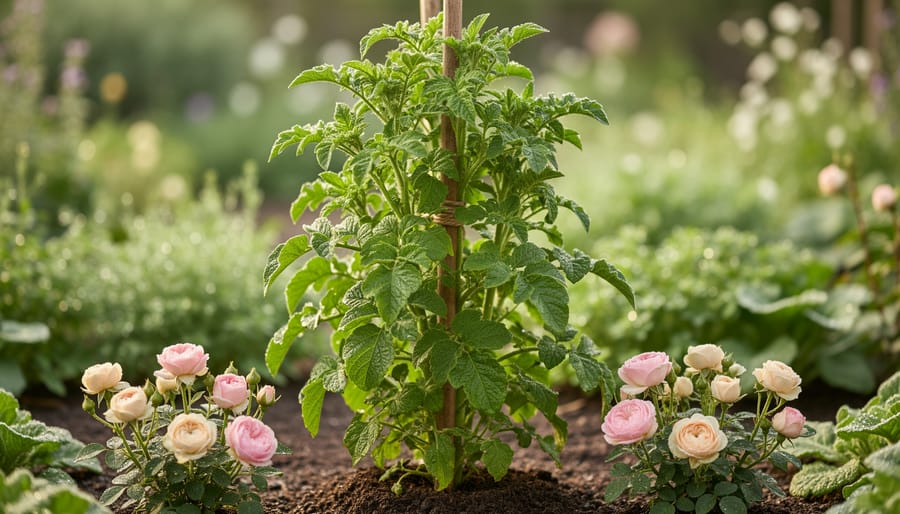
The timing works beautifully. Early-blooming stock varieties flower from late spring through early summer, overlapping perfectly with the first flush of miniature rose blooms. Plant white or lavender stocks behind pale pink miniature roses like ‘The Fairy’ for a soft, romantic border. For bolder contrast, pair burgundy stocks with coral or apricot miniature roses, creating depth through vertical layering.
Container gardens benefit from this combination too. Choose a wide planter at least eighteen inches deep and position three to five stock plants toward the back, anchored with bamboo stakes. Tuck miniature roses in front where their compact habit won’t be overshadowed. The stocks’ upright spires contrast with the roses’ bushier form, and both benefit from the same feeding schedule with balanced fertilizer every three weeks.
Height differences create natural structure. Column stocks reach twenty-four to thirty inches, providing the vertical accent, while most miniature roses stay under eighteen inches. This tiered effect eliminates the flat, monotonous look that single-variety plantings sometimes produce.
Fragrance multiplies when you grow stocks near roses. Position them along walkways or near seating areas where their combined scent becomes a garden highlight. Both flowers excel as cutting material, so you can bring that fragrance indoors in mixed bouquets that last five to seven days with fresh water changes.
Creative Uses for Stock Flowers Beyond the Garden
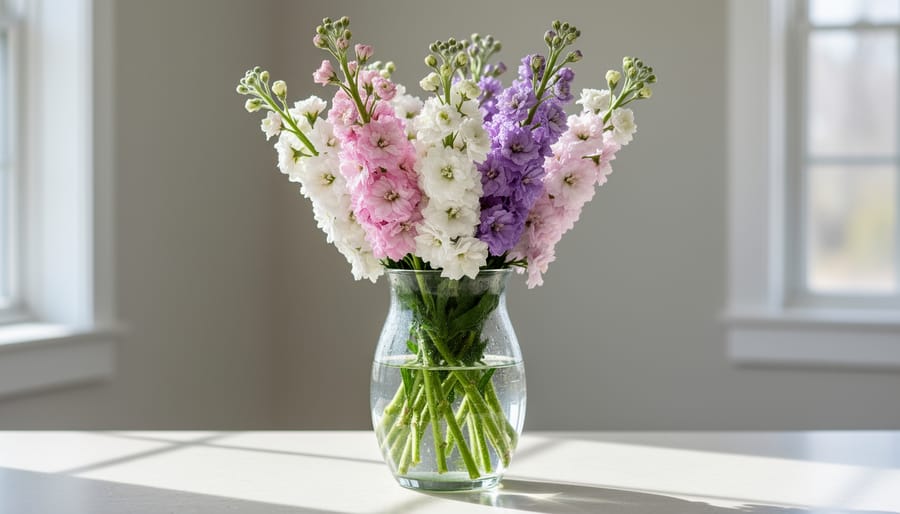
Once your stocks reach their peak bloom, you’ll want to enjoy them beyond the garden bed. These fragrant beauties excel as cut flowers, lasting up to ten days in a vase when cut in the early morning with stems at a 45-degree angle. Their spicy-sweet scent fills entire rooms, making them perfect for bedroom nightstands or dining tables where you can appreciate their perfume up close.
Stock petals offer wonderful crafting opportunities similar to roses. You can use petals creatively in homemade potpourri, pressing individual florets for cards and bookmarks, or infusing them into scented sachets for drawers and closets. The vibrant colors hold well when air-dried, especially the deeper purples and pinks.
To preserve that signature fragrance, hang cut stems upside down in small bundles in a dark, dry space. Once dried, strip the petals and store them in sealed glass jars, adding them to bath mixtures or layering them with lavender for custom sachets. In my Newburyport studio, I’ve found that stock petals maintain their scent for months when properly dried, creating lasting reminders of summer’s abundance. Their versatility matches that of miniature roses, giving you multiple ways to extend the joy of your garden long after the growing season ends.
Growing a garden of stocks rewards you with months of intoxicating fragrance, vibrant color, and the deep satisfaction that comes from nurturing these cottage garden classics. The gardening sticks and support techniques we’ve covered aren’t just practical necessities, they’re your secret to transforming leggy stems into stunning vertical displays that command attention throughout the season. Whether you’re drawn to the rich purples, soft pinks, or pristine whites, stocks bring an old-world elegance that pairs beautifully with miniature roses and other beloved garden companions.
The care principles that help stocks flourish mirror what makes miniature roses thrive: attentive watering, proper feeding, and structural support when needed. Here in Newburyport and across New England, these reliable performers adapt wonderfully to our coastal climate when given the foundation they deserve.
Start your stock garden this season with confidence in your support systems. Plant your chosen varieties, set your stakes early, and watch as those upright stems burst into fragrant bloom. We’d love to hear about your stock-growing adventures, which varieties steal your heart, and how you’ve paired them with roses in your own garden designs. Share your experiences and inspire fellow gardeners to embrace these timeless beauties.