
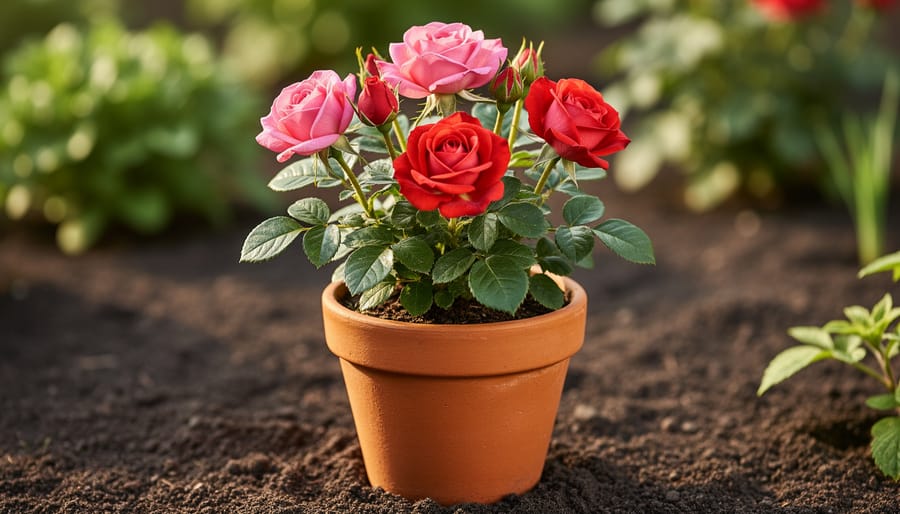
Feed miniature roses with a balanced rose fertilizer (or a half-strength all-purpose one) every four to six weeks from spring leaf-out until late summer, watering the soil first and the fertilizer in second. That’s the whole routine, and it takes about ten minutes per plant. The only real prerequisites are a fertilizer made for roses and a measuring spoon, because miniatures are small plants with small roots, and a full-strength dose can scorch them fast.
Why does this schedule work? Miniature roses bloom repeatedly, and all that flowering burns through nutrients. Regular, gentle feeding keeps the leaves deep green and the buds coming, while stopping before fall lets the canes harden off before a cold New England winter. If you garden in Newburyport, where late frosts and salty coastal breezes shape the season, timing matters even more than the brand on the bag.
Whether you’re growing in pots on a sunny porch or tucking plants into a border, the same rules apply. Your miniature rose varieties may differ in color and bloom size, but their appetite is surprisingly similar. Fertilizer is one piece of the bigger picture of miniature rose cultivation requirements, alongside sun, drainage, and pruning.
Below, you’ll find the tools you need, the mistakes to avoid, a step-by-step method, and a seasonal calendar. And once those blooms arrive, save the petals. They make lovely homemade potpourri and sugar scrubs.
Why Miniature Roses Have Their Own Feeding Needs
Don’t let the “miniature” label fool you. These little plants are working hard. A miniature rose pushes out new leaves and buds again and again through the season, and all that growth draws on the soil. Their compact root systems also hold only a small amount of nutrients at a time, so what’s there can run low faster than you’d expect.
Feeding is one piece of the bigger picture of Miniature Roses Cultivation Requirements. Fertilizer can’t make up for too little sun (aim for at least six hours), soggy soil, or irregular watering. Get those basics right first, and your feeding routine will really pay off.
You’ll see three numbers on every fertilizer label, called N-P-K:
– Nitrogen (N) fuels healthy green leaves and stems.
– Phosphorus (P) supports strong roots and flower production.
– Potassium (K) helps the whole plant stay sturdy and handle stress.
Where your roses live matters, too. In-ground minis can draw on a larger pool of soil and often hold nutrients longer. Container-grown minis are a different story: every time you water, some nutrients wash out through the drainage holes. That’s great for avoiding soggy roots, but it means potted roses usually need feeding a bit more often than those in the garden bed.
Once you understand why these plants need steady nourishment, choosing the right fertilizer becomes much easier.
Choosing a Fertilizer and Gathering Your Tools and Materials
Granular, Liquid, or Organic: Matching Fertilizer to Your Garden
Not sure which fertilizer fits your garden? Here’s a simple way to compare the three main types.
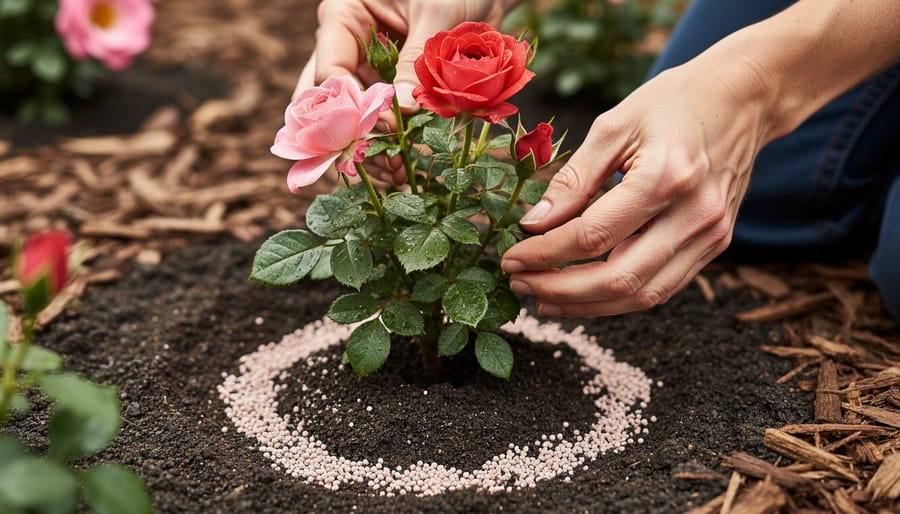
Granular slow-release fertilizer is a great pick for busy gardeners. You sprinkle it around the base of the plant, water it in, and it feeds gently for six to eight weeks, sometimes longer. Most in-ground miniature roses do well with a feeding every six to eight weeks through the growing season, so there’s very little to remember.
Water-soluble (liquid) fertilizer suits container growers, since pots lose nutrients quickly every time you water. Mix it at half the label strength and apply every two to three weeks. It works fast, so you’ll see results sooner, but it needs more regular attention.
Organic options like compost, alfalfa meal, and fish emulsion are wonderful for gardeners who prefer a natural approach. Work compost or alfalfa meal into the top inch of soil every four to six weeks. Fish emulsion is diluted and applied every two to four weeks. Organic products build healthy soil over time, though they act more slowly and fish emulsion has a noticeable smell.
You can mix and match, too. Many gardeners use a slow-release granular as their base and add a light liquid boost during peak bloom. Pick the method that fits your routine, because the one you’ll actually stick with is the one that works best.
Safety Warnings: Avoiding Fertilizer Burn and Other Mistakes
Fertilizer is helpful, but a little goes a long way with miniature roses. Their compact roots are easy to overwhelm, so a few simple precautions keep your plants safe.
Start with the most important rule: never feed a dry or stressed plant. Dry soil makes fertilizer salts concentrate around the roots, which can scorch them. Water well the day before, or at least an hour ahead, and skip feeding entirely if your rose is wilting from heat or drought.
Newly planted or recently repotted minis need patience. Wait four to six weeks before their first feeding so the roots can settle in and begin growing on their own. Fresh potting mix often has some nutrients already built in.
When you do feed, keep granules and liquid off the leaves and away from the base of the stems. Sprinkle or pour around the outer edge of the root zone instead. Wear gloves, and wash your hands afterward. Store every product in a closed container, out of reach of children and pets. Sweep stray granules off patios and walkways so rain doesn’t wash them into storm drains or garden beds.
Overfeeding shows up in a few clear ways:
– Crispy, brown leaf edges
– A white, crusty film on the soil surface or pot rim
– Lots of lush green leaves but very few blooms
If you spot these signs, flush the pot or soil with plenty of plain water to rinse away excess salts, then pause feeding for several weeks.
Step-by-Step: How to Feed Your Miniature Roses
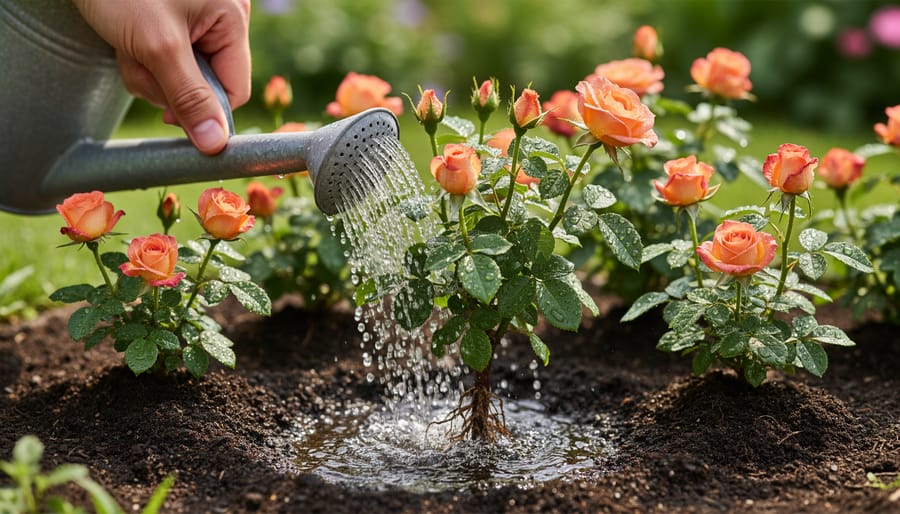
Feeding your miniature roses doesn’t need to feel complicated. Once you’ve gathered your fertilizer, measuring cup, and gloves, the whole job takes about ten minutes per plant, and it works the same way for pots and garden beds. Think of it as a short routine you’ll soon do without thinking.
- Water the plant thoroughly the day before, or earlier that morning, so the soil is evenly moist. Never feed a dry, thirsty rose.
- Measure your fertilizer at the label’s rate. Because minis are small, many gardeners go with half strength, especially for potted plants and water-soluble products.
- Apply the fertilizer around the drip line, the circle of soil beneath the outermost leaves, and keep it from touching the canes or crown.
- Lightly work granular products into the top inch of soil with a hand fork, or mix liquid feed into your watering can and pour it slowly onto the soil.
- Water again to carry the nutrients down to the roots. For potted minis, keep going until a little water drains from the bottom holes.
- Refresh the mulch, pulling it back slightly from the canes, to hold moisture and keep the soil cool.
- Jot the date in your garden journal so you know exactly when to feed next.
A few small tips make this even easier. Feed in the cool of early morning or evening rather than under a blazing midday sun, which is kind to both you and the plant. For in-ground minis, a ring of fertilizer spread evenly works best, while container roses do well with the diluted liquid approach, since pots flush nutrients out quickly.
If you grow several minis, work your way down the row with the same steady pace. That journal entry pays off later, too, because you’ll spot patterns in how your roses respond. Small, consistent habits like these are what keep blooms coming all season long.
A Simple Feeding Calendar for New England Gardens
In New England, timing matters more than quantity. Miniature roses follow a predictable growing cycle and your feeding calendar should simply follow it. Here’s a simple schedule that works well for gardens around Newburyport.
Spring (late April to May): Wait until the risk of hard frost has passed and you see new leaf buds swelling. Give a light first feeding at half the label rate. This gently wakes the plant without pushing tender growth that a surprise cold snap could nip.
Early summer through midsummer (June to July): This is peak blooming, so feed regularly. Slow-release granules usually need just one or two applications, while water-soluble or organic liquid feeds can go on every two to four weeks. Always water the plant first and follow the package directions.
Late summer (mid-August): Give your final feeding now. Fertilizing any later encourages soft, leafy growth that early fall frosts can damage, and that new growth won’t have time to toughen up before cold weather arrives.
Fall and winter: Skip fertilizer entirely. Your roses are heading into dormancy, and feeding a sleeping plant only wastes product and risks harming the roots. In-ground minis can rest under a layer of mulch. Potted minis do best moved to a protected spot, like an unheated garage or sheltered porch, where the soil stays cool but doesn’t freeze solid. Water lightly once in a while so the roots don’t dry out.
Gardening elsewhere? Simply shift the calendar to match your own frost dates: start feeding after your last spring frost and stop about six to eight weeks before your first fall frost.
Verification and Next Steps: Is Your Fertilizer Working?
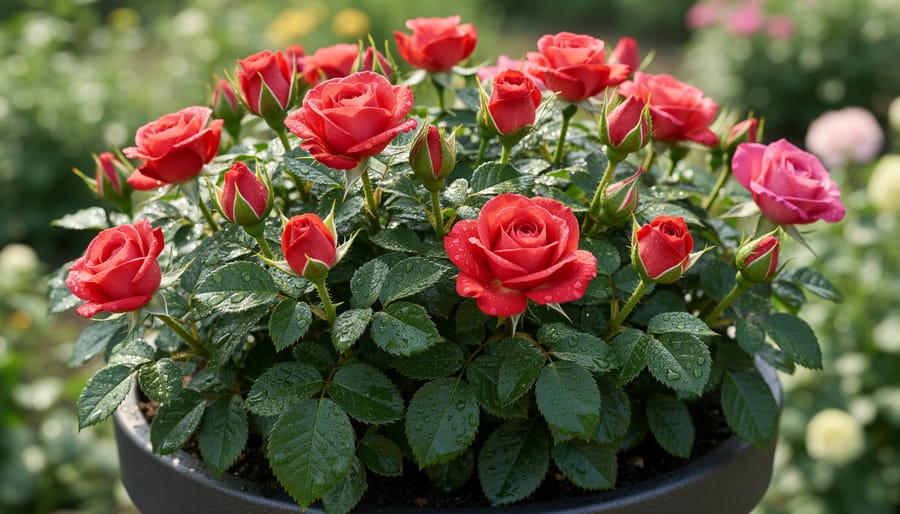
Give your feeding routine two to four weeks before judging it. Roses respond slowly, so patience pays off. As you check in, look for these signals:
- Success: deep green, glossy leaves and sturdy new canes.
- Success: more buds forming and steady repeat blooming.
- Adjust: pale or yellowing leaves, which can mean the plant needs a bit more nitrogen.
- Adjust: brown, crispy leaf edges, which point to too much fertilizer.
- Adjust: lots of leafy growth with few blooms, a sign of too much nitrogen.
If growth looks pale, give the next scheduled feeding as planned and check that the plant is getting enough water. For leggy, floppy stems, the cause is usually too little sun rather than too little food. For burned edges, skip a feeding and water deeply to flush the soil, especially in pots. Then resume at a lighter rate.
Fertilizer works best alongside the rest of Miniature Roses Cultivation Requirements. Make sure your plants get at least six hours of sun, that the soil drains well, and that you water at the base rather than over the leaves. Deadhead spent blooms and give a light trim to any weak or crossing stems to encourage fresh flowering. For more ideas on keeping your plants in top form, browse these rose garden tips.
Once those blooms arrive, don’t toss the fading petals. Dry them for homemade potpourri, sugar them for cake decorations, or steep a few in a pot of rose petal tea. You’ll find plenty of charming rose petal ideas to put your harvest to good use.
Miniature Rose Fertilizer FAQs
Still have a few questions about feeding your minis? You’re in good company. Here are the ones gardeners ask most often.
Can I use regular rose fertilizer on miniature roses?
Yes, a balanced rose fertilizer works well, but dilute it to about half the strength on the label. Miniature roses have small root systems, so full-strength doses can easily burn them.
How often should I feed potted miniature roses?
Potted minis lose nutrients faster because every watering flushes some out the drainage holes. A diluted liquid feed every two to four weeks during the growing season keeps them steady, or use a slow-release granular product as directed.
Should I fertilize indoor miniature roses in winter?
Hold off while the plant is resting. Without strong light and active growth, extra fertilizer just builds up in the soil, so wait until new growth appears in spring.
What if I forget a feeding?
Don’t worry, and don’t double up next time. Just return to your normal schedule at the regular amount, and your roses will bounce back.
Many gardeners also wonder about kitchen scraps like coffee grounds and banana peels. They can add a little organic matter, but they release nutrients slowly and unevenly, so treat them as a bonus rather than your main feeding plan. Compost is a more reliable homemade choice.
As for organic options, fish emulsion, alfalfa meal, and compost can be just as effective at supporting healthy growth. They tend to work more gently and build the soil over time, so you may notice results a little more gradually than with synthetic products. Whichever route you choose, steady and modest feeding beats big, occasional doses every time.
Feeding miniature roses doesn’t have to be complicated. Small, regular, well-timed meals keep the plant steady, supporting sturdy canes, deep green leaves, and plenty of buds. Think of fertilizer as one piece of the bigger picture of Miniature Roses Cultivation Requirements, working hand in hand with good light, proper drainage, and consistent watering.
If you’re just getting started, keep it simple. Choose one product that suits your garden, mark a few feeding dates on your calendar, and stick with them. You can always fine-tune as you learn how your plants respond. Gardeners in cooler spots, like those around Newburyport, can lean on the seasonal schedule above and adjust it to their own frost dates.
Nor-East Miniature Roses Inc. in Newburyport, Massachusetts, is a welcoming resource for anyone curious about ornamental floriculture, whether you’re a first-timer or a seasoned rose lover. Now go enjoy those blooms. And when the petals begin to fade, don’t toss them. Potpourri, sugared petals, or a fragrant cup of rose petal tea are lovely ways to savor your harvest.