
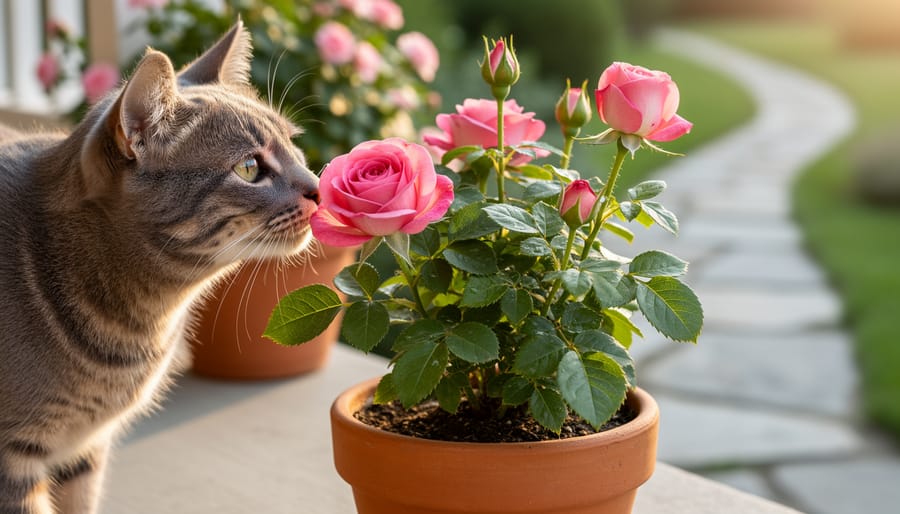
No, miniature roses are not toxic to cats. The ASPCA lists roses as non-toxic to cats, dogs, and horses, which means a curious nibble on a petal, leaf, or bloom from one of these compact, small-leaved shrubs won’t poison your pet. Miniature roses are simply scaled-down roses, usually staying under two feet tall, and they’re popular on sunny windowsills, porch pots, and garden borders from Newburyport to the far end of Plum Island.
So why do some cat owners still worry? Because the plant itself isn’t the whole story. The real risks are the thorns, which can scratch a paw or nose, and anything sprayed or mixed into the soil, such as systemic insecticides, fungicides, and some fertilizers. Those can cause genuine trouble if a cat chews or licks treated foliage.
Below, you’ll find how to spot the difference between a safe bloom and a risky one, what to do if your cat gets into your roses, and a few creative ways to put spent petals to good use, all without worrying about your four-legged gardening helper.
What Are Miniature Roses, and Are They Safe Around Cats?
A Quick Definition of Miniature Roses
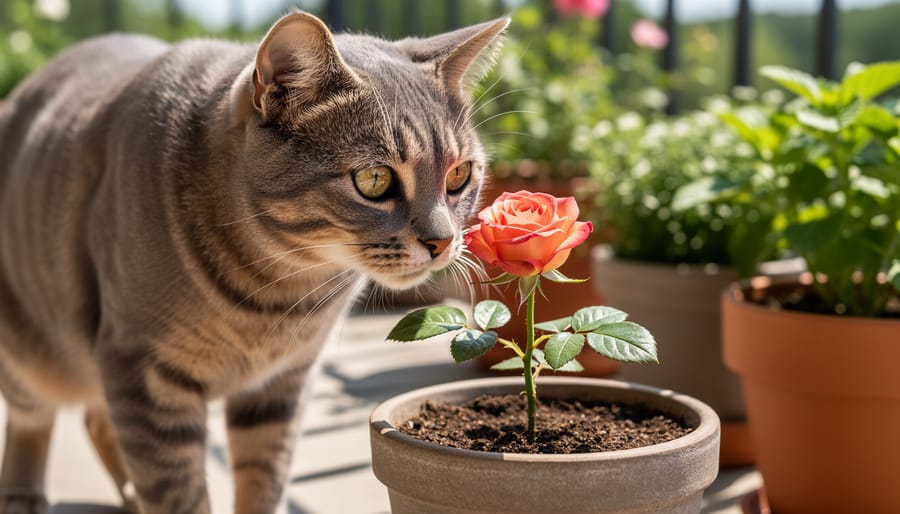
A miniature rose is simply a true rose, bred small. The plants usually stay between 6 inches and 2 feet tall, with leaves and blooms scaled down to match. The flowers are often about an inch or two across, yet they still show the classic rose shapes: tight spiral buds, fluffy double petals, or open, single-layer blooms. Colors run from creamy white and soft pink to fiery orange and deep red.
Because they’re so compact, miniature roses are wonderfully flexible. Gardeners tuck them into borders, line walkways with them, and grow them in pots on patios or sunny windowsills. If you’d like to see how much variety is out there, browse the many miniature rose varieties available. No big yard required, and no gardening experience needed to enjoy them.
What ‘Non-Toxic’ Really Means for Your Cat
“Non-toxic” is a label about poison, not a promise that your cat can chew on a plant with zero consequences. When a plant is listed as non-toxic, it simply means it isn’t known to contain compounds that poison cats. Roses fall into that category, and you can confirm it by browsing the ASPCA’s list of Plants beginning with R.
Still, cats are carnivores with sensitive stomachs, and they aren’t built to digest leaves and petals. A cat that munches a few too many can end up with a bit of drooling, an upset tummy, or a brief bout of vomiting. That’s irritation from plant fiber, not poisoning.
Every cat is also a little different. A big, hardy tomcat might shrug off a nibble, while a small or sensitive kitty could feel queasy from the same bite. Think of non-toxic as “very unlikely to harm,” and keep an eye on your curious companion.
How Roses Can Still Cause Problems for Curious Cats
Thorns, Petals, and Leaves: What Happens if a Cat Chews
Each part of a miniature rose affects a curious cat a little differently, and none of the effects are dramatic. Petals are the gentlest. A cat that bats at a fallen bloom and takes a nibble will usually shrug it off, and a petal or two is unlikely to cause any trouble at all.
Leaves are tougher and more fibrous. Cats aren’t built to digest much plant material, so a mouthful of foliage can sometimes bring on a little drooling or a single bout of vomiting. That’s the body’s way of sending the extra greenery back out, and it typically passes within a few hours.
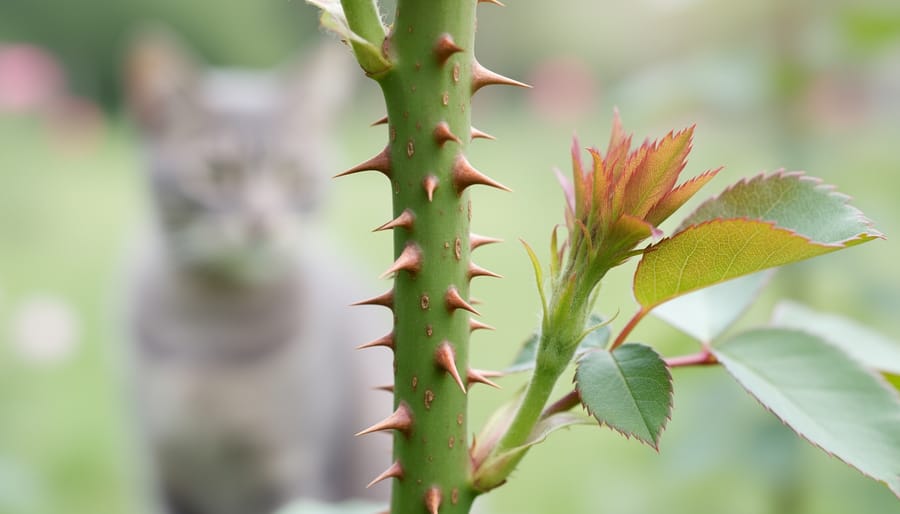
Thorns are the real nuisance. Even on miniature roses, those tiny prickles can scratch a nose, snag a lip, or nick a paw pad when a cat investigates a little too enthusiastically. You might notice pawing at the face, mild bleeding, or a cat that suddenly won’t chew on one side.
A quick look at your cat’s mouth and paws after any rose-sniffing adventure is a smart habit, and it takes just a moment.
The Hidden Hazards: Pesticides, Fertilizers, and Other Treatments
Here’s the part that deserves your attention: the rose itself is rarely the culprit. The products used to keep it looking lovely are the bigger concern for a curious cat.
Systemic rose care products are a good example. These are absorbed into the plant’s tissues, so the leaves and petals can carry residue even after the surface looks clean. Potted roses from florists and grocery stores are often treated this way before they ever reach your home. Sprays can also linger on foliage, and a cat that brushes past a wet leaf will happily groom it off its fur later.
Granules need extra caution. Slug bait and fertilizer pellets sit right on the soil, where a nosy cat can easily lick or swallow them, and some slug products are seriously harmful to pets.
This is why labels matter so much. Read the directions, look for pet-safe wording, and follow drying times before letting your cat near treated plants. If the label doesn’t spell out pet safety, treat the product as one to keep well out of reach.
Types of Miniature Roses and Rose Products to Watch Around Pets
Not every rose in your home carries the same level of risk for a curious cat. The plant itself is gentle, but the form it arrives in, and what has been applied to it, changes the picture quite a bit. Here’s a quick rundown of what to think about:
- Potted plants from florists or grocery stores: Often treated with systemic products that soak into the plant, so ask about treatments and keep these out of reach at first.
- Garden-grown miniature roses: Usually the lowest-risk option when you know exactly what you’ve sprayed or fertilized them with.
- Cut miniature blooms: Fine as a rule, but florist stems may carry preservatives or sprays, so place vases high up.
- Dried or decorative petals: Low toxicity, though they’re a choking and tummy-upset hazard if swallowed in quantity.
- Potpourri: Often scented with added oils and sometimes dyed, so keep it well away from cats.
- Essential oils: Concentrated rose and other oils can be genuinely harmful to cats, so skip diffusing or applying them around pets.
Looking at that list, the pattern is pretty clear. The closer a rose product stays to a plain, untreated plant, the safer it is. A miniature rose you’ve grown yourself, fed with pet-conscious products, is about as worry-free as it gets. That’s one reason so many home gardeners, including those who shop with growers like Nor-East Miniature Roses Inc in Newburyport, Massachusetts, enjoy raising their own.
The extra caution belongs with anything that has been processed, scented, or treated. A grocery-store pot may look innocent, yet it could be loaded with a systemic product meant to keep pests away. Likewise, a cheerful bowl of rose-scented potpourri can hide fragrance oils that are far harder on a cat than any petal. When you’re unsure what’s on or in a rose product, treat it as treated and keep it out of paw’s reach.
Using Miniature Roses and Rose Petals Safely in a Cat-Friendly Home
Keeping Your Roses and Your Cat Both Happy
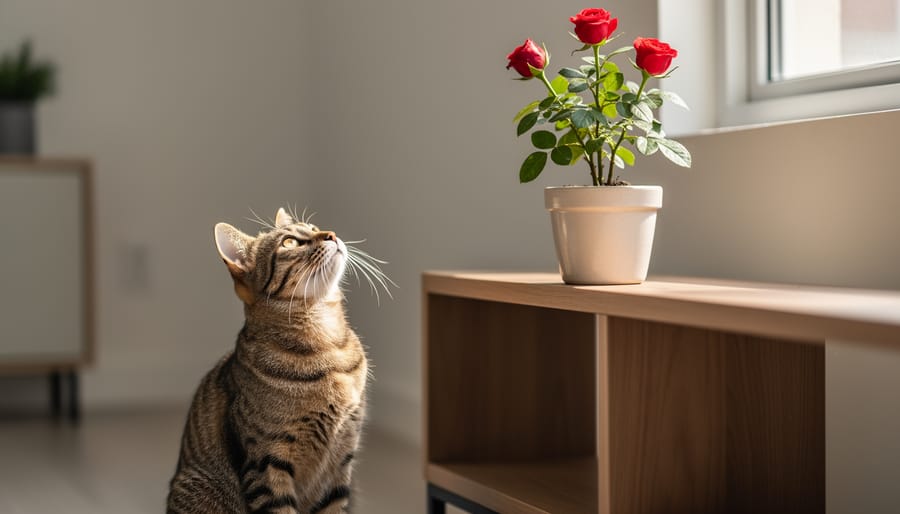
Keeping a cat and a miniature rose happy together mostly comes down to smart placement. Start by lifting your pots out of easy reach. A tall plant stand, a hanging planter, or a high windowsill shelf keeps nibblers and thorn-brushers away without hiding your blooms. Our indoor care tips cover light and spacing, so you can choose a spot that suits both the plant and your pet.
If you’d rather plant outside tuck aromatic deterrents like lavender or rosemary around the base, since many cats steer clear of strong scents.
Give your cat a better option, too. A tray of cat grass on the floor often pulls attention away from your roses.
Finally, rinse any store-bought plant under lukewarm water and let it drain before bringing it home. This washes off surface residue from sprays, which is the real hazard to watch for.
Creative Ways to Enjoy Rose Petals Around Pets
Rose petals open up plenty of creative options, and most of them can stay perfectly cat-friendly with a little planning. If you love to use rose petals in your projects, start with untreated blooms from your own pesticide-free plants. Pressed petals make lovely bookmarks, framed art, and handmade cards, and once they’re flat and dry, they’re easy to tuck out of paw’s reach.
In the kitchen, a few fresh petals scattered over a cake or salad add a pretty touch, as long as the blooms were never sprayed. Wash them well and keep prepared dishes covered, since cats are famous for sampling countertops.
Be pickier with scented items. Potpourri, rose essential oils, and fragranced sachets are the things to store high on a shelf or in a closed drawer. Never use petals from florist bouquets or store-bought plants for crafts or food, because you can’t know what they were treated with.
What to Do if Your Cat Eats a Miniature Rose
If you catch your cat chewing on a miniature rose, stay calm. Most cases are mild, and your steady hands will help more than panic. Gently move your cat away from the plant, check the mouth and paws for thorn scratches, and take a quick look at what’s left of the plant so you know roughly how much was eaten.
Watch for drooling, vomiting, lethargy, loss of appetite, pawing at the mouth, or limping. Thorn injuries can look like small punctures or swelling, so keep an eye on those spots over the next day.
Call your veterinarian or a pet poison helpline if symptoms persist, if your cat seems unusually tired, or if you suspect the plant was treated with sprays, systemic products, or fertilizer granules. Have the plant tag, product label, and your cat’s approximate weight ready. Treated plants always warrant a call, even if your cat seems fine.
Are rose petals safe for cats to eat?
Untreated petals are generally non-toxic, but eating a lot can still cause mild stomach upset.
Are potted store-bought roses riskier?
Often, yes. They may carry systemic treatments or residues, so ask the seller and keep them out of reach until you know.
Are other flowers in a bouquet safe?
Not necessarily. Lilies, for example, are dangerous to cats, so check every stem before your cat has access.
When should I call the vet?
Call if vomiting or lethargy continues, a thorn injury looks swollen, or the plant may have been treated.
Even when everything turns out fine, a quick call gives you peace of mind and helps you plan safer placement for your roses.
How Are Miniature Roses Toxic to Cats Works
Here’s the plain-language version of what happens when a cat meets a miniature rose. The plant itself doesn’t contain a known poison that attacks a cat’s body. Roses lack the compounds found in truly dangerous plants like lilies, so a nibble on a petal or leaf rarely triggers a toxic reaction.
What can happen is simple irritation. A cat’s stomach isn’t built to digest much plant matter, so swallowing a good amount of leaf or petal may lead to drooling, a bit of vomiting, or loose stools. That’s the body clearing out something it didn’t need, not true poisoning.
The thorns work differently. They act like tiny needles, scratching lips, tongues, and paws, and a small puncture can occasionally get sore or infected.
The real mechanism of concern is chemical. Systemic rose care products are absorbed into the plant’s tissues, so a cat chewing a treated stem or leaf takes in whatever the plant has soaked up. That’s why treated plants deserve far more caution than the roses themselves.
Miniature roses and cats can absolutely share a home. The roses themselves aren’t known to poison cats, so a curious nibble on a petal or leaf is unlikely to cause more than a mild tummy upset. The real things to keep an eye on are the thorns, which can scratch a paw or mouth, and anything that’s been applied to the plant, like sprays, systemic treatments, or fertilizer granules. Those deserve your attention far more than the blooms do.
A few simple habits go a long way. Check labels before treating your plants, choose pet-conscious products when you can, rinse store-bought roses before bringing them home, and keep potpourri and scented oils well out of reach. If your cat does chew on a rose and you’re unsure whether it was treated, a quick call to your vet or a pet poison helpline will put your mind at ease.
So go ahead and enjoy your little roses, whether they’re lining a sunny windowsill or brightening a patio. With a bit of thoughtful care, your garden and your cat can both thrive.