
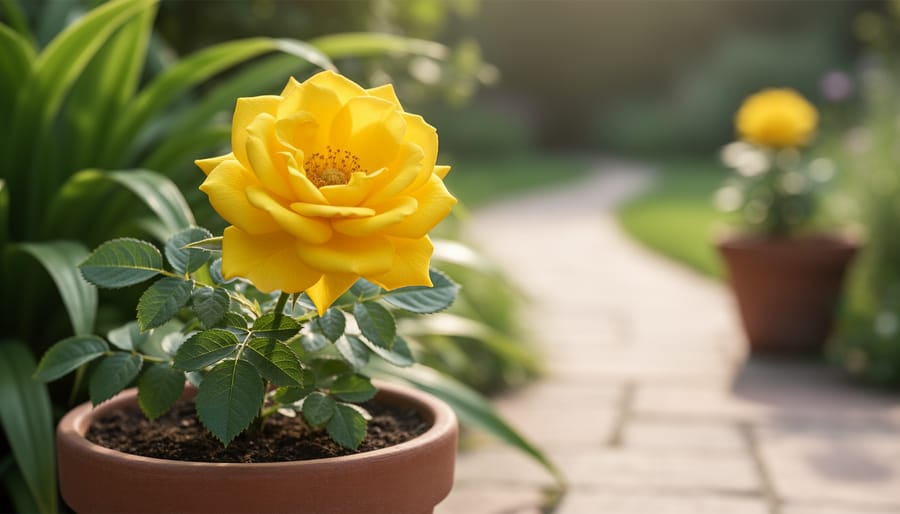
Yellow miniature roses do far more than sit pretty in a pot. Eight uses stand out: sunny windowsill and patio containers, rose petal tea and infused honey, candied petals for cake decor, pressed blooms for cards and keepsakes, homemade potpourri and sachets, tiny bouquets and centerpieces, fairy gardens, and companion plantings beside herbs and perennials. Each one takes an afternoon or less, and none demands gardening expertise.
Why these roses work so well comes down to size and color. A miniature rose stays compact, usually under two feet, so it fits a balcony pot as happily as a border edge. The butter-yellow blooms read bright from across a yard, and the petals are small enough to press flat, sugar delicately, or tuck into a jar of honey. If you garden in a place like Newburyport, where salt air, brisk winters, and a shorter growing season shape every choice, that compact habit is a real advantage, since containers can move indoors or to a sheltered corner when the weather turns.
Below, you’ll find a quick guide to choosing healthy plants, then eight ideas ranked by how much creativity they invite. Start with whichever one makes you smile.
How We Chose These Yellow Miniature Rose Ideas
Every idea on this list earned its spot by passing five practical checks. We curated these ideas from known gardening practices rather than hands-on testing, so think of this as a thoughtful shortlist, not a lab report.
- Space-friendly: it works on a windowsill, patio, or small bed.
- Beginner-friendly: no special tools or years of experience required.
- Plays to yellow’s strengths: bright, cheerful color that pops against frosting, foliage, and purples.
- Adaptable to cooler coastal climates: realistic for places like Newburyport, Massachusetts.
- Creative beyond ordinary planting: more than just putting a rose in the ground.
A quick definition helps. A miniature rose is a compact rose with small blooms and leaves, and a scaled-down true miniature stays petite in every part of the plant. If you’d like to explore varieties first, our guide to miniature roses is a great starting point.
Climate matters too. A hardiness zone is a map-based rating built on average coldest temperatures, and it tells you which plants can handle your winters. With cold snaps and salty coastal wind in Newburyport, containers you can shelter or move indoors are a smart, sensible choice.
8 Inspiring Ideas for Yellow Miniature Roses
1. Sunny Windowsill and Patio Containers, Instant Color in Small Spaces
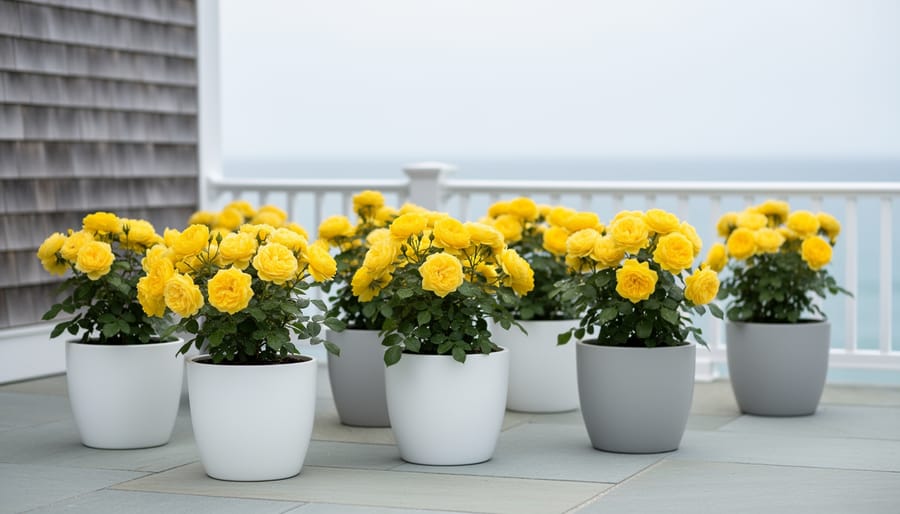
Yellow miniature roses are made for containers. Choose a pot at least 10 to 12 inches wide and 10 inches deep, so the roots have room to spread, and make sure it has drainage holes. Soggy soil is the quickest way to lose a potted rose, so lift the pot onto small feet to let water escape freely.
Give your roses a spot with at least six hours of direct sun. A south-facing windowsill, sunny balcony, or bright patio corner keeps the blooms glowing and buttery rather than pale. Water when the top inch of soil feels dry, and feed lightly during the growing season.
When the first frosts approach, bring your pots to a cool, bright spot indoors or tuck them close to the house. Water sparingly through winter, then welcome them back outside in spring.
2. Rose Petal Tea and Infused Honey, a Gentle Kitchen Treat
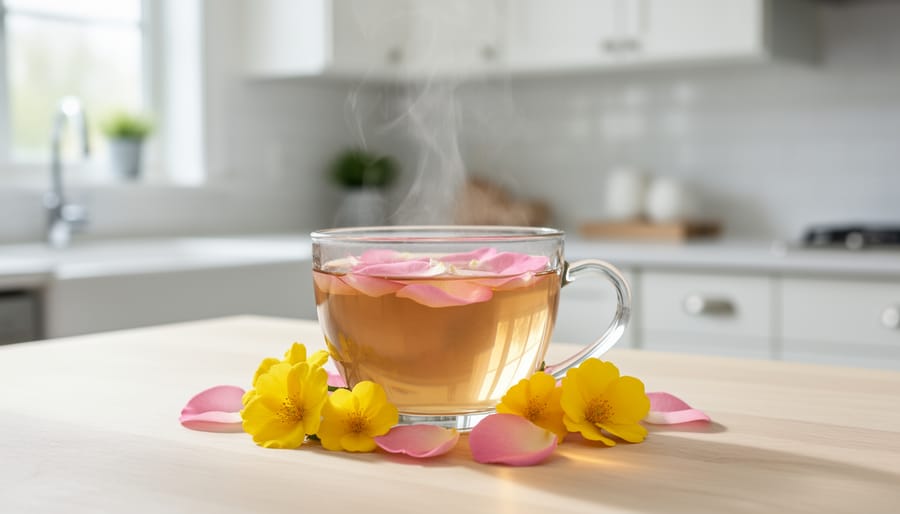
Yellow miniature roses can make a lovely, mild kitchen treat, but the safety rules come first. Use only petals from roses you’ve grown yourself without pesticides or chemical sprays, and never pick from nursery plants or florist bouquets, which are often treated. Before you eat any petals, confirm the variety is food-safe and give yourself a small first taste.
For tea, gather a small handful of petals in the morning once the dew has dried. Rinse them gently and shake dry. Steep a tablespoon of fresh petals (or a teaspoon of dried) in a cup of hot, not boiling, water for five minutes. You’ll get a soft, floral cup that pairs nicely with a slice of lemon.
For infused honey, pack clean, fully dry petals loosely into a small jar and cover with mild honey. Stir to release any air bubbles, seal, and let it rest for a week or two in a cool spot. Strain if you like, then drizzle it over toast or stir it into warm tea.
3. Candied and Sugared Petals, Edible Cake and Dessert Decor
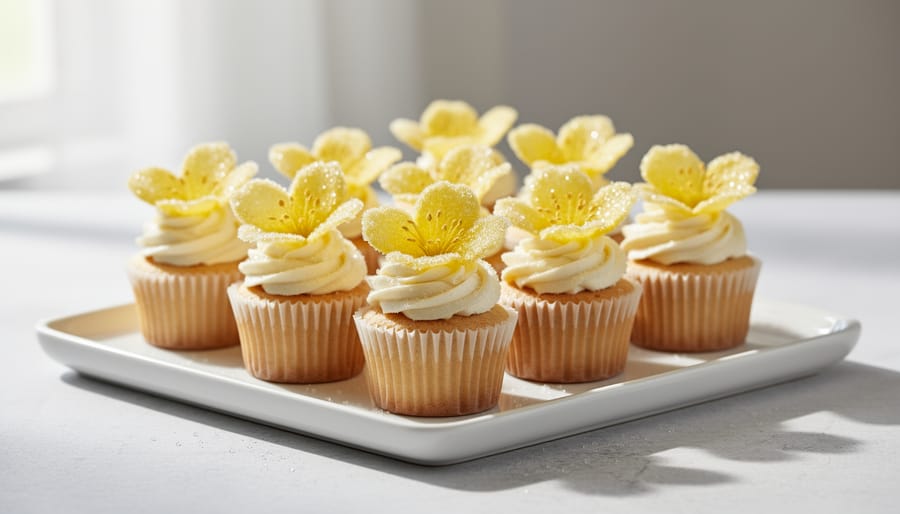
Sugared petals are one of the easiest ways to turn a plain cake into something that looks bakery-made. Start with petals from roses grown without pesticides, and confirm they’re food-safe before they go near dessert. Gently rinse them and let them dry completely on a paper towel, because any dampness will make the sugar clump.
Next, lightly brush each petal with beaten egg white (or a pasteurized egg white substitute) using a small, clean paintbrush. Sprinkle fine granulated sugar over both sides, shake off the excess, and set the petals on parchment to dry for several hours, or overnight. They’ll turn crisp and sparkly.
Yellow is a real showstopper here. Against white buttercream or chocolate ganache, those sunny petals pop without any extra food coloring. Tuck a few onto cupcakes, scatter them over a sheet cake, or press one into a sugar cookie for a sweet, springtime finish. Store them in an airtight container, and use within a few days.
4. Pressed Petals and Blooms for Cards, Frames, and Keepsakes
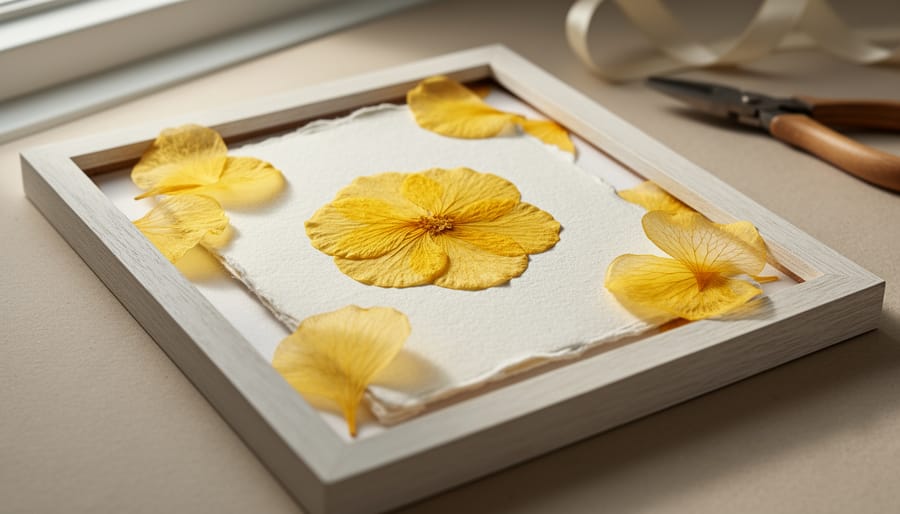
Pressing is one of the gentlest ways to keep yellow miniature roses long after the bushes go dormant. Their small, flat-ish blooms and petals dry beautifully, which makes them perfect for cards, bookmarks, and tiny framed pieces.
Start by picking blooms in the morning, once the dew has dried. Lay petals or small whole flowers between two sheets of parchment paper, tuck them inside a heavy book, and stack a few more books on top. Leave them alone for two to three weeks. In a hurry? A flower press speeds things up.
Once dry, dab on a little clear craft glue to attach them to cardstock or a bookmark, or seal them under glass in a simple frame.
Expect the color to mellow over time. Bright yellow often softens to a warm cream or antique gold, which has its own vintage charm. Keep finished pieces out of direct sun to slow the fading.
5. Homemade Potpourri and Sachets, Soft Fragrance for Drawers and Rooms
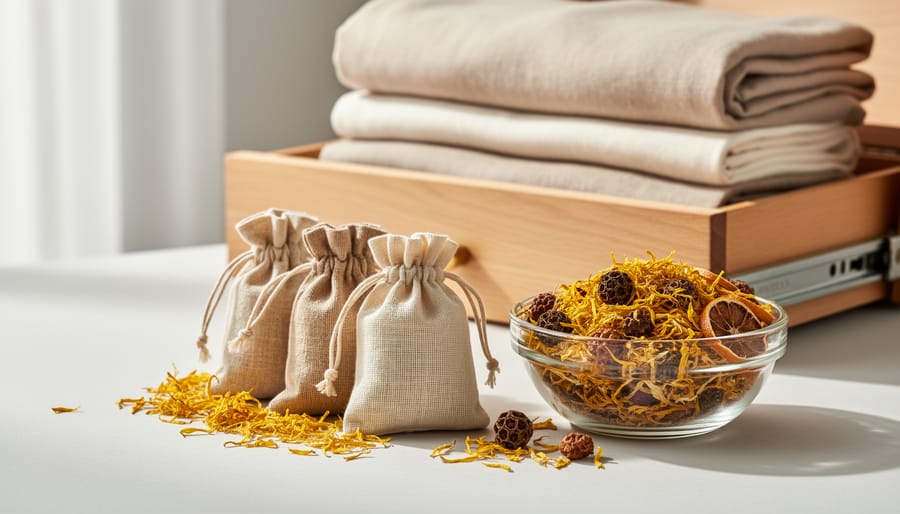
Yellow rose petals dry beautifully, and a handful of them can scent a drawer for months. Pick blooms on a dry morning, once the dew has lifted, and pluck the petals gently. Spread them in a single layer on a screen or paper towel in a warm, shaded spot with good airflow. They’ll be crisp in about a week.
For sachets, blend your dried petals with lavender buds, rosemary, or dried mint from the garden. Spoon the mix into small muslin bags or squares of cotton tied with ribbon. A few drops of essential oil will refresh the scent as it fades, so give the bag a squeeze now and then.
Potpourri is just as simple. Toss the petals in a pretty bowl with citrus peel and a pinch of cloves. Here in Newburyport, a jar tied with twine makes a lovely holiday gift, and you can swap in pine sprigs come December for a seasonal refresh.
6. Tiny Bouquets and Table Centerpieces, Big Charm from Small Blooms
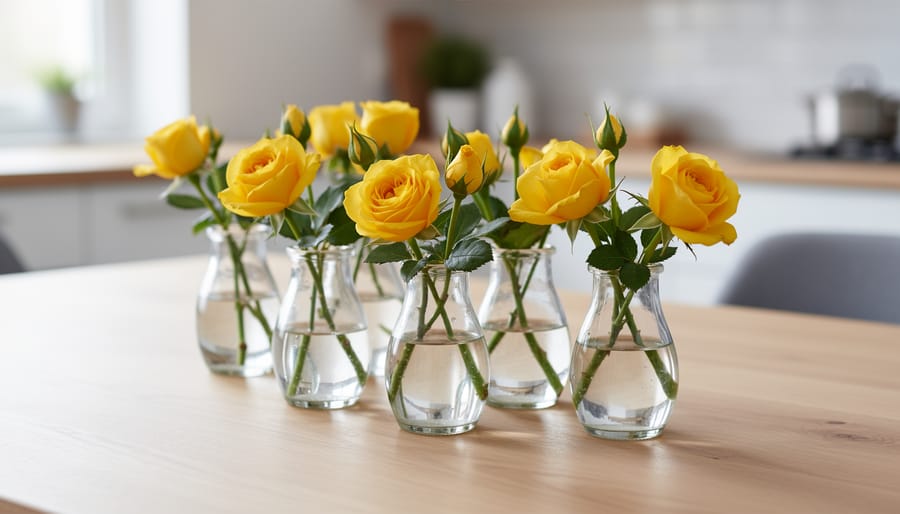
A few yellow miniature roses can fill a room with sunshine. Choose a pretty teacup, a small mason jar, or a bud vase, and you have a centerpiece ready for the kitchen table or a Newburyport porch gathering.
Cut stems in the cool of early morning, just as the buds begin to open. Use clean, sharp snips and cut at an angle, just above a leaf set. Strip any leaves that would sit below the waterline, since they rot quickly and cloud the water.
Drop the stems into lukewarm water right away. Let them drink for an hour or two somewhere cool and shaded before arranging. This conditioning step helps the blooms last much longer.
For teacups, tuck a small piece of floral foam or a crumpled bit of chicken wire inside to hold stems upright. Change the water every day or two, and trim a little off each stem as you do.
7. Fairy Gardens and Miniature Landscapes, a Storybook Scene
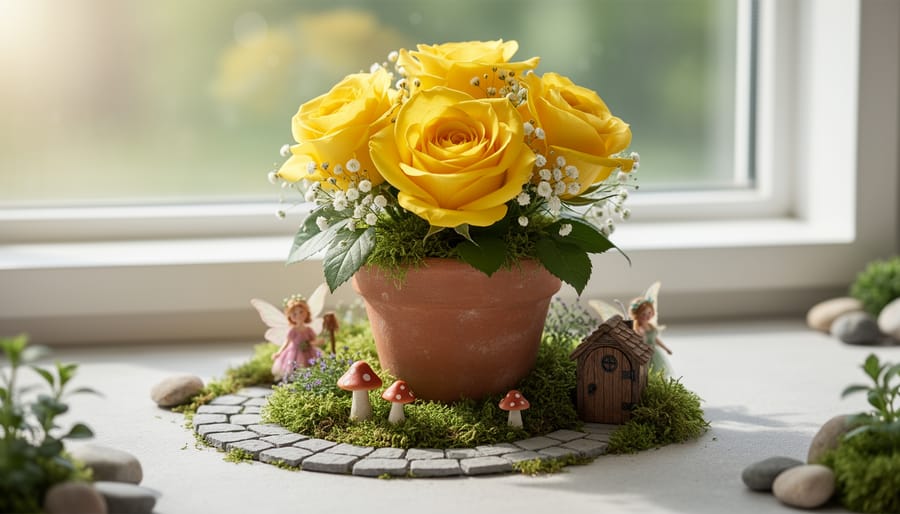
A fairy garden gives a yellow miniature rose the starring role it deserves. Pick a wide, shallow container, like a low planter or a weathered wooden crate, and let one compact rose anchor the scene. Its golden blooms look like tiny sunlit trees beside a pebble path or a little wooden bridge.
Choose companions that match the scale. Creeping thyme, baby tears, and Irish moss make a convincing lawn, while a small stone or driftwood piece suggests a boulder. Keep the soil well-draining and tuck in a layer of gravel at the bottom of the pot so the rose doesn’t sit in water.
This one is great fun for families. Kids can arrange the figurines, shape the paths, and water the garden themselves. Keep it in a spot with at least six hours of sun, and bring it indoors or into shelter when New England frosts arrive.
8. Companion Planting and Border Accents, Yellow Pops Beside Herbs and Perennials
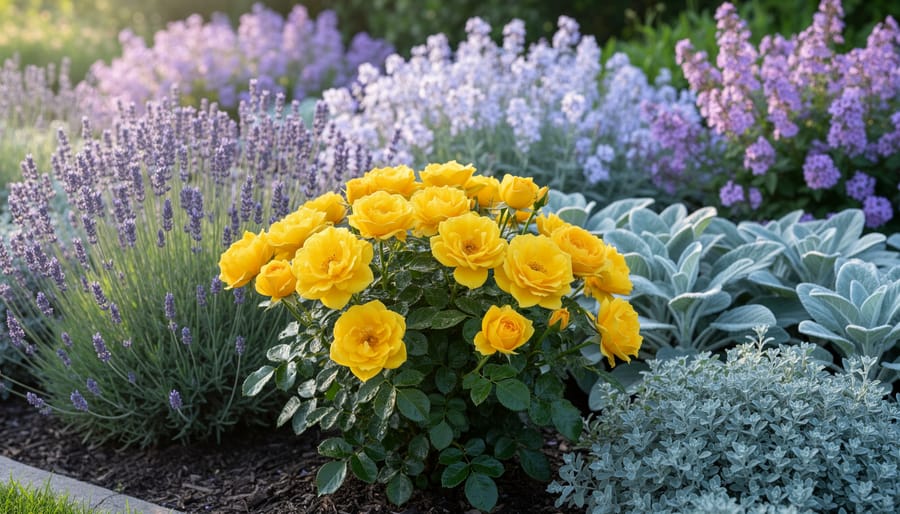
Yellow miniature roses play nicely with other garden favorites, and a mixed bed often looks richer than a bed of roses alone. Their buttery blooms practically glow next to purples and blues, which sit opposite yellow on the color wheel and make it look even brighter. Even a small border in Newburyport, where coastal wind can be tough on tall, floppy plants, benefits from compact companions that share the roses’ need for sun and good drainage.
Here are a few easy partners to try:
- Lavender: its silvery foliage and purple spikes contrast beautifully, and it loves the same sunny, well-drained spot.
- Catmint: soft blue flowers fill gaps and keep the bed blooming for weeks.
- Chives: tidy, lavender-pink pom-poms add color and you can snip them for the kitchen.
- Sage: purple or gray-green leaves calm the brightness of yellow blooms.
- Salvia: upright blue-violet blooms add height without crowding small roses.
Leave a little breathing room around each rose so air can move through the leaves, and you’ll have a border that looks lovely and feels like a true garden project.
Common Questions About Yellow Miniature Roses
Can yellow miniature roses survive New England winters?
Many can, especially with a little protection. In Newburyport, mulch the base after the first hard frost, or move potted roses to a sheltered spot like an unheated garage. Knowing the growing cycle helps you time that protection well.
How much sun do they need?
Aim for at least six hours of direct light a day. Morning sun is ideal, and a little afternoon shade keeps coastal heat from stressing the blooms.
Are the petals safe to use creatively?
Only if your roses were grown without pesticides or chemical sprays. For tea, honey, or sugared petals, confirm the plant is food-safe first, and see these rose petal ideas for gentler, non-edible projects.
How do I keep the yellow color vivid?
Deadhead spent blooms, water at the soil level, and feed regularly during the growing season. Strong afternoon sun can bleach petals, so a touch of shade helps preserve that buttery tone.
Whichever question brought you here, don’t let it hold you back. Yellow miniature roses are forgiving little plants, and a little attention goes a long way toward rewarding you with sunny blooms.
Bring a Little Sunshine Home: Your Next Step with Yellow Miniature Roses
Pick just one idea from this list and give it a go this week. Maybe it’s a pot of sunshine on the porch, or a handful of petals for a little tea. Yellow miniature roses reward even small efforts, and a single bloom can make a corner of your home feel brighter.
Once your first roses are settling in, a little feeding goes a long way, and you can learn how to fertilize for blooms that keep coming all season. Whether you’re in Newburyport or anywhere else, start small, enjoy the process, and let those sunny petals do the rest.