
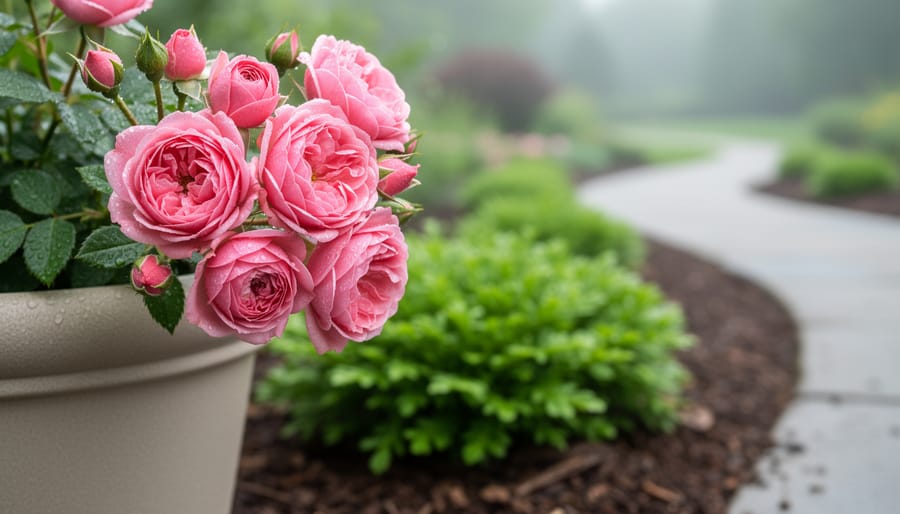
Pink miniature roses are good for far more than a pot on the windowsill. The best uses fall into eight ideas: patio containers, edible garnishes, pressed petal keepsakes, potpourri and sachets, tiny table centerpieces, garden borders, fairy gardens, and living gifts. Each one works on its own, so you can pick the project that fits your space and your skill level, and none of them require gardening experience.
First, a quick definition. A miniature rose is a compact rose bush that usually stays under about two feet tall, with smaller leaves and blooms than a standard rose. That small size is what makes it so flexible. It fits a doorstep container, edges a path, and tucks into a mini landscape without taking over.
We chose these eight ideas based on how doable they are, how much joy they give back, and how well they handle a New England climate. In Newburyport, salty breezes, cold winters, and humid summers mean container roses may need winter protection and borders benefit from a sheltered spot. We’ll flag those details as we go.
You’ll also find creative ways to use the petals themselves, from sweet garnishes to dried keepsakes. Let’s start with the easiest win.
How We Chose These Pink Miniature Rose Ideas
Before you dive into the list, here is how it came together. This is a curated collection of ideas, not a hands-on product test, so every pick was chosen for how well it fits real gardens and homes rather than ranked by trial. If you’re wondering what are miniature roses the short answer is that they’re roses bred to stay compact, usually under about two feet tall, with smaller blooms and leaves than their full-size cousins. That tidy size is exactly what makes them so flexible.
Each idea had to meet a few simple standards:
- Easy to start, with no special skills or fancy equipment needed.
- Space-friendly, so it works on a patio, windowsill, or small city lot.
- Climate-aware for Massachusetts and similar New England regions.
- Budget-friendly, using supplies you likely already have.
- A real creative payoff, whether in the garden, kitchen, or craft room.
Pink miniature roses also earn their spot because they bloom over a long season, so one plant can keep giving from late spring well into fall. That steady color means you can cut a few stems or gather petals without leaving the plant bare.
Because winters here can be harsh, I kept Newburyport’s coastal weather and cold snaps in mind. Where an idea needs a little extra care, like moving a pot or adding mulch, I’ll say so plainly.
1. Pink Miniature Roses in Containers for Patios and Doorsteps
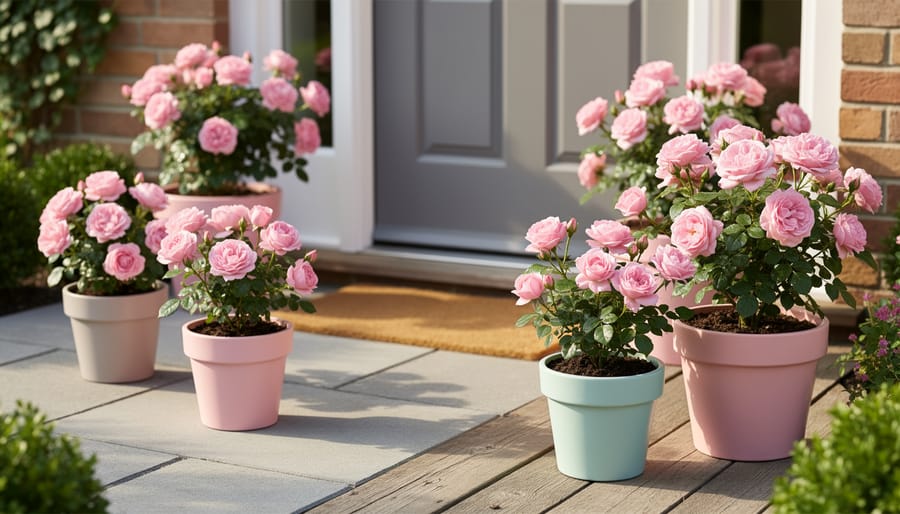
Pink miniature roses were made for pots. Their compact size means a single container can hold a full season of blooms, whether it sits on a front stoop, a balcony rail, or a sunny corner of a small city lot. Window boxes work well too, especially when you tuck two or three plants side by side for a fuller look.
Start with the right pot. Choose a container at least 10 to 12 inches wide and about as deep, which gives the roots room to spread without drying out too fast. Drainage matters more than almost anything else, so make sure there are holes in the bottom. Soggy roots are the most common reason container roses struggle. A light, well-draining potting mix, rather than heavy garden soil, keeps things healthy.
Place your roses where they will get about six hours of sun each day. Morning light is especially kind, since it dries the leaves early and helps prevent mildew.
For watering, give the soil a good soak when the top inch feels dry, letting extra water run out the bottom. Pots dry out faster than garden beds, so check them often in summer, sometimes daily during a heat wave.
Here in Newburyport, coastal breezes can be a gift and a challenge, cooling the air but also drying out leaves and knocking over tall planters. That’s where containers shine. Slide them against a wall during a blustery stretch, or carry them indoors when an early frost threatens.
2. Pink Rose Petal Garnishes and Edible Touches
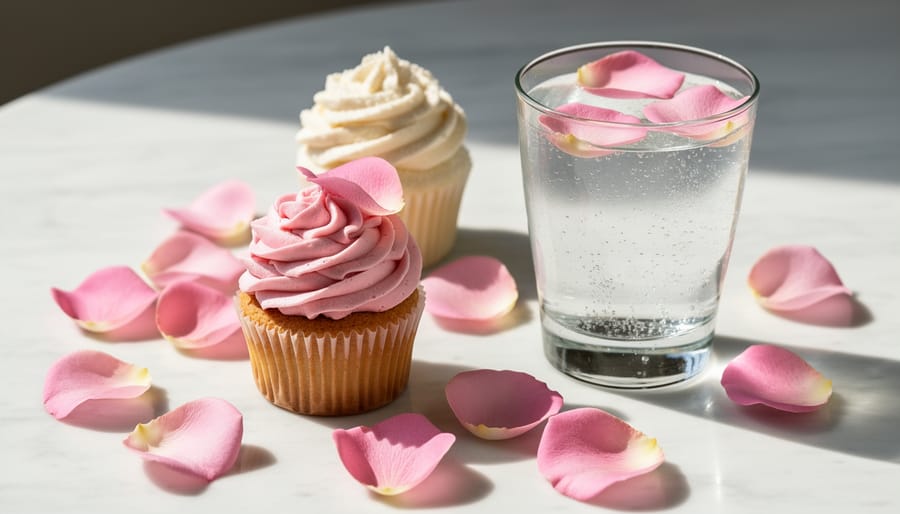
Edible flowers are blooms that are safe to eat, and pink miniature rose petals are one of the prettiest. Their color is the real star here: a soft blush or bright rose-pink that makes a plate look special. The flavor is mild and lightly floral, a little like a whisper of perfume with a faint sweetness, so it won’t overpower your food.
You can use mini rose petals in so many easy ways. Scatter a few over a green salad for a pop of color. Sprinkle them on cupcakes, panna cotta, or a simple bowl of vanilla ice cream. Freeze whole small blooms or loose petals inside ice cubes for lemonade, iced tea, or sparkling water, and watch them float like tiny jewels. A few petals tucked into a glass of bubbly make an instant celebration drink.
Once you have a safe source, a little care goes a long way. Pick blooms in the cool morning, gently pluck the petals, and give them a soft rinse in cool water. Pat them dry on a clean towel, being careful not to bruise them. Many cooks trim off the small white base of each petal, which can taste bitter.
Because the petals are so delicate, add them just before serving so they stay fresh and vibrant. Start with just a few, taste, and enjoy how a small garden-grown touch can turn an everyday dish into something memorable.
3. Pressed and Dried Pink Rose Petals for Keepsake Crafts
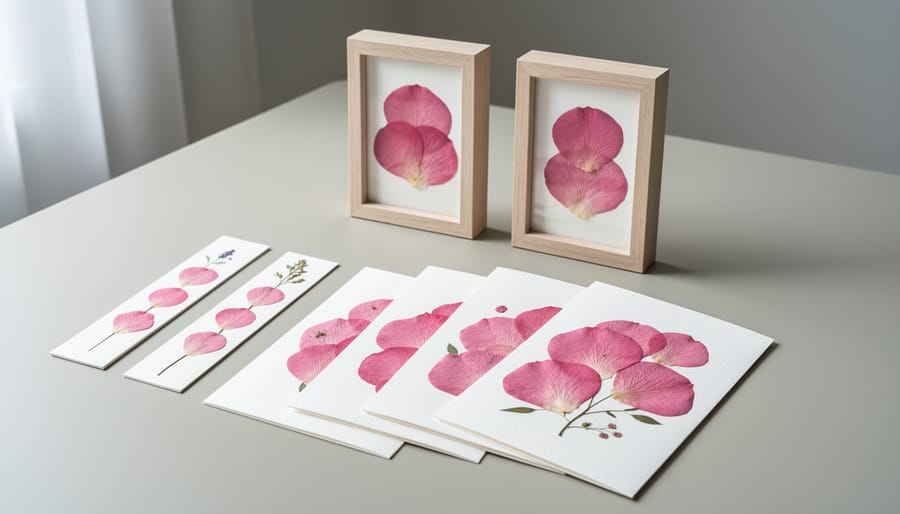
Pink miniature roses are wonderful for pressing because their blooms are small and fairly flat once opened, so they dry evenly without much fuss. You don’t need special equipment, just a heavy book, some parchment paper, and a little patience.
Start by cutting blooms in the morning, after the dew has dried but before the afternoon heat. Choose flowers that are fully open but still fresh, with no brown edges. Place a sheet of parchment inside a large, heavy book, lay the roses face down with a little space between them, and cover them with a second sheet. Close the book and stack a few more books on top for extra weight. Leave everything alone for two to three weeks. Peeking early is the most common mistake, since damp petals can tear or turn brown.
Pink tones tend to hold up nicely with this method. Soft blush shades often deepen slightly into a vintage rose color, which gives finished pieces an old-fashioned charm. Keep your pressed flowers out of direct sunlight afterward, because strong light slowly bleaches the color.
Once dry, the petals are ready for keepsake projects:
– Framed botanical art between two panes of glass
– Bookmarks sealed with clear laminate or contact paper
– Handmade cards with petals glued gently in place
– Shadow boxes arranged with ribbon, small notes, or other pressed blooms
Because each piece captures a real moment from your garden, these crafts make heartfelt gifts for birthdays, weddings, and anniversaries.
4. Homemade Pink Rose Potpourri and Sachets
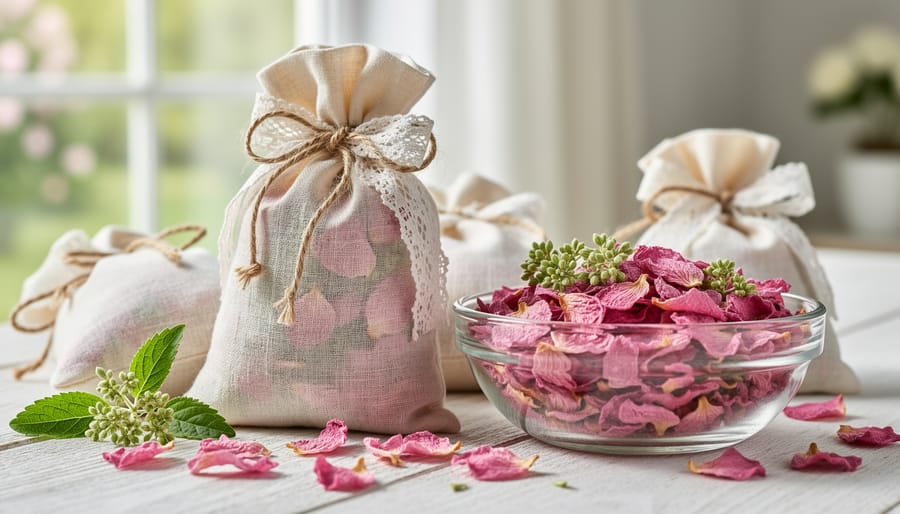
Once your pink miniature roses have had their moment in the garden, their petals can keep working for you indoors. Dried petals hold a soft blush color and a gentle, sweet scent, which makes them perfect for sachets tucked into drawers and closets or for a pretty bowl of potpourri on a side table. If you’re building a showstopper rose garden this is a lovely way to enjoy every last bloom.
A basic pink rose sachet blend needs just a few simple ingredients:
- A generous handful of dried pink rose petals
- A small scoop of dried lavender buds
- A pinch of orris root powder or a similar fixative to hold the scent
- Two or three drops of rose or lavender essential oil, if you like a stronger aroma
Toss everything together in a bowl, then spoon the mix into small muslin or cotton bags and tie them closed. For a bowl of potpourri, skip the bags and add a few whole dried buds on top for color.
To keep the blush tones from fading, dry your petals away from direct sun and store the finished blend out of bright light. Give sachets a gentle squeeze now and then to wake up the fragrance, and refresh with a drop of oil every month or two. A sealed jar in a cool cupboard also helps the scent last through a long New England winter.
5. Tiny Pink Rose Table Centerpieces and Party Décor
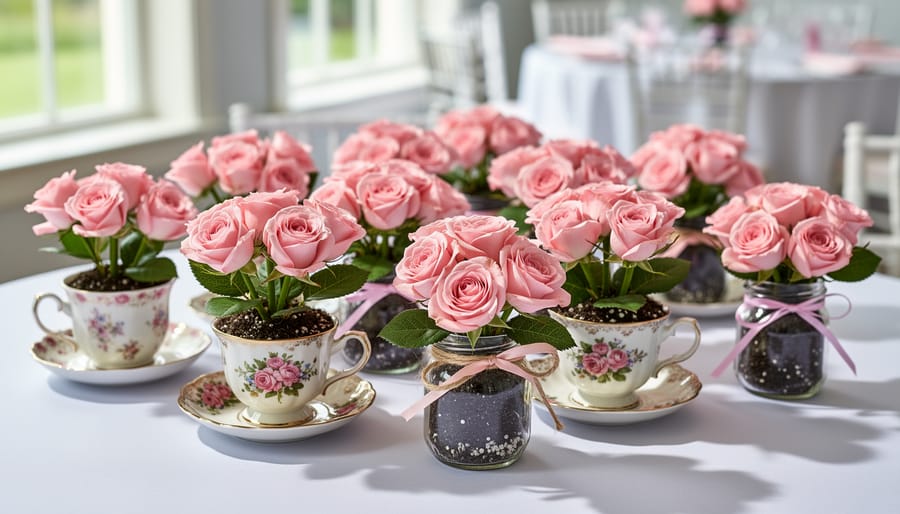
Pink miniature roses are made for the table. Their small, tidy blooms never block a sightline, so guests can chat across a brunch spread without peering around a tall arrangement. Whether you go with a potted plant or a handful of clipped stems, the soft pink tones work with nearly any color scheme, from crisp white linens to rustic wood.
For potted roses, slip a small nursery pot inside a teacup, a pretty tin, or a wooden tray. Line the container with a plastic liner or saucer so the table stays dry. A row of three or four little pots down the center of a long table looks lovely and costs far less than a big bouquet. Clipped stems suit mason jars, small bud vases, or a shallow bowl, where a tight cluster of blooms feels generous.
To keep cut miniature roses fresh, snip stems in the morning, cut them at an angle, and set them in cool water right away. Strip any leaves that would sit below the waterline, and change the water every day or two. Keep the arrangement out of direct sun and away from heaters.
Here’s a favorite party idea: turn the centerpiece into a living favor. At the end of a shower or holiday meal, invite each guest to take a potted pink rose home. It’s a gift that keeps blooming long after the party ends, and it’s a sweet reminder of the day every time a new bud opens.
6. Pink Miniature Roses as Edging and Border Plants
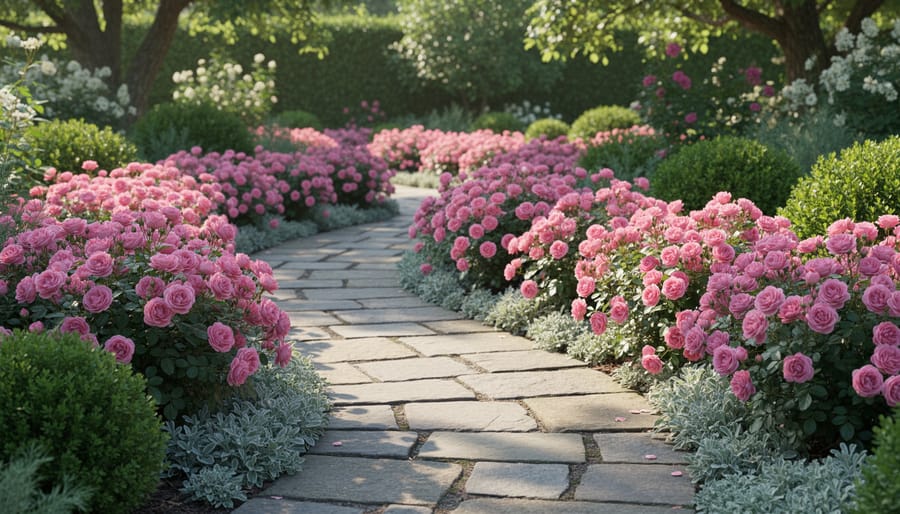
Pink miniature roses make wonderful edging plants. Their compact habit, usually staying under two feet, keeps them tidy along walkways, while their steady bloom season adds soft color from early summer into fall. Plant them about 12 to 18 inches apart for a full, flowing line, and they’ll knit together into a ribbon of pink that frames a garden bed like a living picture frame.
They also soften the hard lines of a vegetable plot or herb garden. A row of blush-pink blooms at the front of the beds turns a purely practical space into something you’ll want to linger in. Bees visiting the roses will stick around for your squash and beans, too.
Good companions keep the border interesting. Lavender brings silvery foliage and a calming scent that pairs beautifully with pink. Sweet alyssum spills along the ground, filling gaps and offering tiny white blooms that nicely set off the roses. Chives are a lovely, easygoing neighbor, with pretty purple pom-pom flowers in spring and a harvest of fresh flavor for the kitchen.
For New England gardens, including those around Newburyport, choose varieties labeled hardy for your zone and plant them where they’ll get about six hours of sun. Spread two to three inches of mulch in late spring to hold moisture and steady soil temperatures. After the first hard frost, add a few more inches of mulch or shredded leaves around the base to protect the crown through winter. In spring, prune away any dead tips, and your border will be ready to bloom again.
7. Pink Miniature Roses in Fairy Gardens and Mini Landscapes
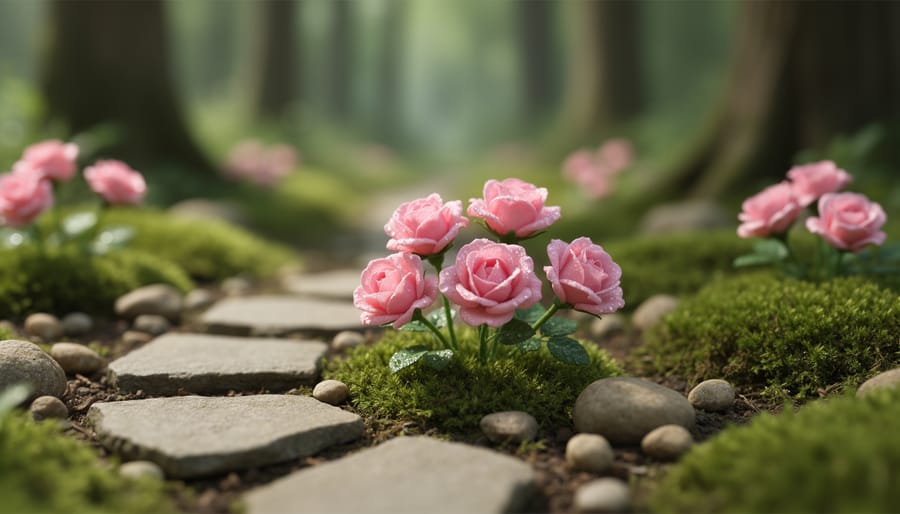
Miniature roses were practically made for tiny landscapes. Their small leaves and compact, rounded shape keep the scale believable, so a pink bloom reads like a full-sized rosebush in a little storybook world. That makes them a lovely focal point for fairy gardens, shallow dish gardens, and even a teacup scene on a sunny kitchen table.
Start with a wide, shallow container that has drainage holes. A terracotta saucer, an old wooden crate, or a ceramic bowl all work well. Plant your pink miniature rose off-center, then build the scene around it. Smooth river stones make a path, and a bit of green moss softens the edges and holds a little moisture. Add petite companions like creeping thyme, baby tears, or a tiny sedum so the rose has some friendly neighbors. Small figurines, a pebble bridge, or a twig bench finish the look.
One practical tip: miniature roses still want about six hours of sun, so place the container where it gets plenty of light. Check the soil often, since shallow dishes dry out faster than deep pots. Here in New England, you can enjoy it on a porch through summer and bring it into a bright spot when cooler nights arrive.
For a fun weekend project, let the kids gather stones and pick the layout while you handle the planting. Everyone gets to be a little designer, and you end up with a keepsake garden that keeps blooming.
8. Pink Miniature Roses as Thoughtful Living Gifts
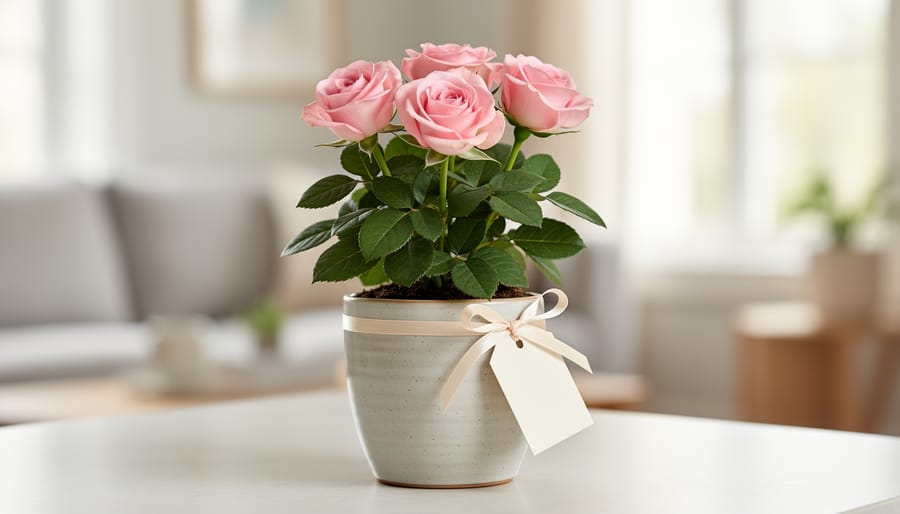
A potted pink miniature rose is a gift that keeps going long after a bouquet would have dropped its petals. It suits birthdays, anniversaries, Mother’s Day, and thank-yous, and it carries a bit of the garden into someone’s home. Soft blush for sentiment, brighter rose-pink for celebration, there’s a shade for every occasion.
Timing matters. Give the plant while it’s in bud or just opening, so the recipient enjoys a full run of blooms. Pick a plant with glossy, deep green leaves, plenty of buds, and no spotting or sticky residue under the foliage. Buying from a trusted nursery, like Nor-East Miniature Roses Inc in Newburyport, makes it much easier to find a healthy, well-rooted plant.
Tuck a simple care card into the pot:
– Bright light, about six hours of sun a day
– Water when the top inch of soil feels dry
– Snip off faded blooms to encourage more flowers
– Keep it away from heating vents and drafts
If the recipient wants to move it outdoors, suggest hardening it off over a week or so, starting with a few hours outside and gradually extending the time. Knowing the rose’s growing cycle helps them plan for winter dormancy in a cold New England climate.
Pink Miniature Rose Questions Answered
Most questions about pink miniature roses come down to light, water, and winter. Here are the answers gardeners ask for most, with a few extra notes for New England growers.
Can pink miniature roses live indoors?
They can for a while, if you give them a very sunny south-facing window or a grow light for about six hours a day. Most do best as outdoor plants that visit the house for a few weeks at a time.
How often should I water them?
Water deeply when the top inch of soil feels dry, which is often every two to three days in summer containers and much less in cool weather. Make sure the pot drains well so the roots never sit in water.
How do I overwinter them in Massachusetts?
Garden-planted roses benefit from a thick layer of mulch piled over the base after the ground starts to freeze. Potted roses are best moved to an unheated garage or sheltered spot, kept just barely moist until spring.
Will pink varieties fade in strong sun?
Some soft blush shades can bleach a little in hot afternoon sun, while deeper rose-pinks hold their color better. A bit of afternoon shade keeps the blooms looking rich.
Which varieties are best for beginners?
Choose compact, disease-resistant varieties that bloom repeatedly, and start with one or two healthy plants in pots. Local nurseries can point you toward types that suit your conditions.
If you’re ready to start, you can order Nor-East varieties that suit your space, whether that’s a patio container, a border, or a living gift for a friend. Whatever you choose, give your new rose a few weeks to settle in, and don’t worry about small setbacks. These little plants are forgiving, and a missed watering or an unexpected chilly night rarely spells the end.
From a sunny patio pot to a plate of petal-topped desserts, pink miniature roses prove they can fit nearly every corner of home and garden life. You don’t need to try all eight ideas at once. Pick the one that sparks your curiosity, whether that’s a doorstep container or a handmade keepsake, and let your confidence (and your collection) grow from there. When you’re ready for healthy plants and fresh inspiration, Nor-East Miniature Roses Inc in Newburyport, Massachusetts, is a wonderful place to start. Happy growing!