
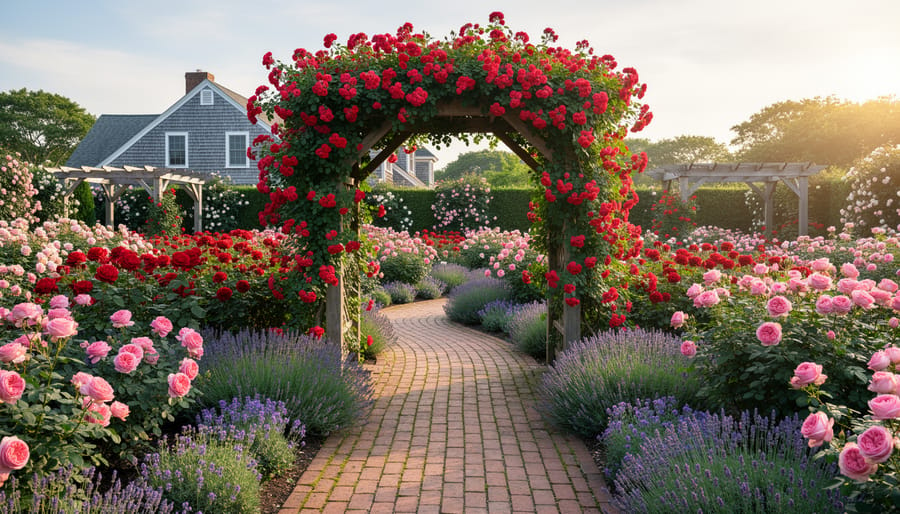
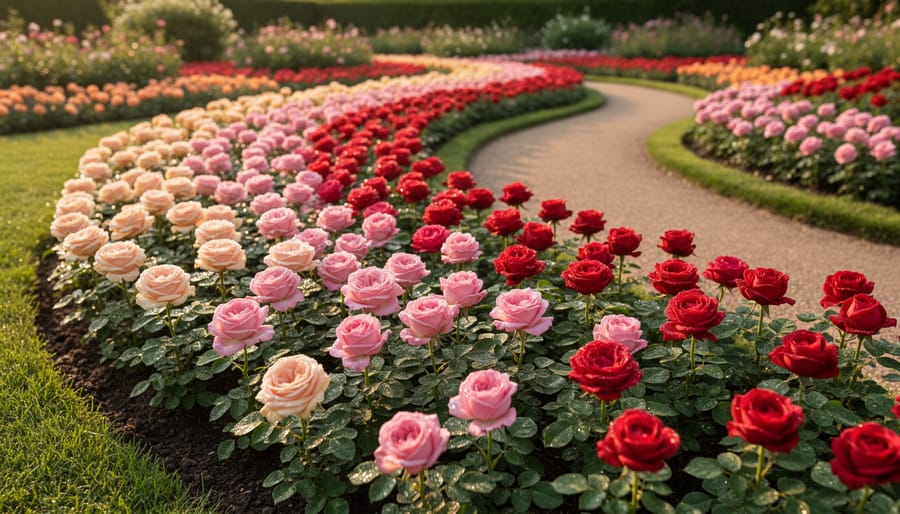
Position your rose garden where it receives at least six hours of direct sunlight daily, preferably morning sun to dry dew from leaves and prevent disease. Create a focal point using a climbing rose on an arbor or trellis as your centerpiece, then arrange hybrid teas and floribundas in curved borders or geometric beds radiating outward. Layer plants by height with grandifloras at the back, compact varieties in the middle, and miniature roses edging the front to establish depth and visual interest.
Select roses suited to New England’s climate, choosing cold-hardy varieties rated for USDA Zone 6 or lower that can withstand Newburyport winters. Include repeat-blooming cultivars to extend your garden’s display from June through October, and mix fragrant varieties with bold colors to engage multiple senses. Space plants three to four feet apart to ensure proper air circulation, which proves essential in our humid coastal environment.
Design pathways at least three feet wide using brick, stone, or mulch to provide comfortable access for maintenance and viewing. Install a dedicated watering system or position your garden near a water source, as roses need consistent moisture, especially during summer droughts. Add companion plantings of lavender, catmint, or salvia between rose beds to enhance aesthetics while attracting beneficial pollinators.
Plan for vertical elements by incorporating obelisks, pillars, or pergolas that support climbing roses and add architectural dimension. Consider dedicating a section to miniature rose varieties in containers or small beds, perfect for experimenting with new colors and collecting blooms for creative projects like rose petal sachets or natural confetti.
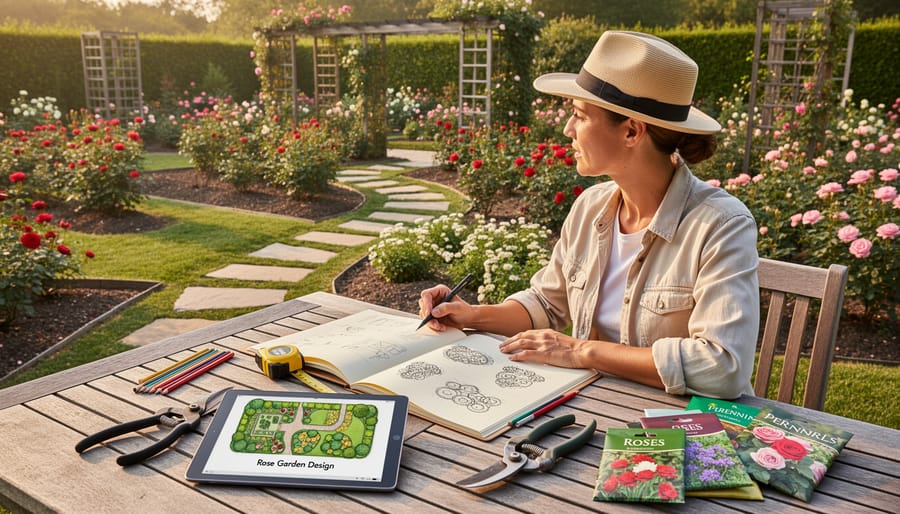
Planning Your Rose Garden Design Refresh
Evaluating What’s Working (and What’s Not)
Before diving into a rose garden redesign, take time to honestly evaluate what’s currently thriving and what needs improvement. This assessment will guide your design decisions and help you create a more beautiful, functional space.
Start by observing your roses throughout the growing season. Keep a simple garden journal noting which varieties produce abundant blooms and which struggle. Pay attention to bloom patterns—do certain areas peak at different times, leaving gaps in color? Roses that consistently underperform despite proper care might be in the wrong location or simply unsuited to your climate. Here in Newburyport and throughout New England, varieties that can’t handle our winter cold or humid summers will always disappoint.
Next, assess traffic flow through your garden. Walk your usual paths and notice where you naturally want to pause and admire blooms. Are your most stunning roses hidden in back corners? Can you easily access plants for deadheading and maintenance? Good garden design places showstopping specimens where they’ll be appreciated and ensures you can comfortably reach all plants for care.
Evaluate visual appeal from multiple vantage points—from your kitchen window, patio, and entry points to your garden. Notice bare spots, overcrowded areas, or monotonous sections lacking height variation. Consider whether your color combinations create the mood you desire or clash unexpectedly.
Take photos from different angles during peak bloom and in off-seasons. These images reveal strengths and weaknesses you might overlook in person. This honest assessment creates your roadmap for improvement, ensuring your redesign addresses real challenges while amplifying what already works beautifully.
Setting Realistic Design Goals
Before you begin transforming your outdoor space, take a moment to honestly assess what you can realistically accomplish. Your dream rose garden should align with three key factors: your available time, financial resources, and current gardening experience.
Start by evaluating your maintenance commitment. If you’re a busy professional or new to gardening, begin with 5-10 low-maintenance rose varieties rather than an elaborate 50-bush masterpiece. You can always expand later as your confidence grows. For Newburyport gardeners facing New England’s demanding climate, choosing hardy varieties that thrive in Zone 6 will set you up for success rather than frustration.
Budget considerations matter too. A beautiful rose garden doesn’t require breaking the bank. Consider starting with bare-root roses in early spring, which cost considerably less than container-grown specimens. Allocate funds for essentials like quality soil amendments, mulch, and basic support structures before investing in decorative elements.
Be honest about your skill level. If you’re just starting out, master growing floribundas or shrub roses before tackling finicky hybrid teas. Remember, even a small collection of healthy, blooming roses creates more impact than an ambitious garden struggling to survive. Set goals that excite you while remaining achievable, and you’ll build both a stunning garden and valuable expertise.
Color Schemes and Variety Selection for Maximum Impact
Monochromatic vs. Multi-Color Approaches
Choosing between a single-color theme and a multi-colored palette significantly impacts your garden’s visual impact and emotional feel. Monochromatic color schemes create elegant, cohesive spaces that feel sophisticated and calming. An all-white rose garden, for example, brings timeless beauty and appears larger than it actually is—perfect for smaller Newburyport yards. Consider varieties like ‘Iceberg’ and ‘White Dawn’ for this approach. All-pink gardens offer romantic charm, while all-red designs deliver dramatic boldness.
Multi-color approaches, however, provide exciting visual energy and allow you to enjoy diverse rose varieties simultaneously. This method works wonderfully when you group colors intentionally rather than scattering them randomly. Try planting three to five roses of the same color together before transitioning to another hue. Warm combinations—yellows, oranges, and reds—energize the space, while cool blends of pinks, purples, and whites promote tranquility.
Your choice depends on your garden’s purpose. Formal designs often benefit from monochromatic restraint, while cottage-style gardens embrace cheerful color mixing. Remember that both approaches yield beautiful petals for creative uses like potpourri or natural dyes. Start with what excites you most—your enthusiasm will carry through every season of care.
Why Miniature Roses Deserve a Central Role
Miniature roses pack tremendous design potential into their compact form, making them indispensable players in any thoughtfully planned rose garden. These petite beauties typically reach only 12 to 24 inches in height, but their smaller stature opens up creative possibilities that larger varieties simply can’t match.
For borders and edging, miniature roses create definition with remarkable precision. Line pathways with these charming plants to establish clear visual boundaries while maintaining sightlines to the garden beyond. Their manageable size means you won’t need constant pruning to keep walkways accessible, a practical advantage that busy gardeners truly appreciate.
Container gardening reaches new heights with miniature roses. Place them on patios, balconies, or even windowsills where space constraints would eliminate standard roses from consideration. Here in Newburyport, where many gardeners work with smaller urban lots or coastal properties with limited planting areas, containers filled with miniature roses deliver maximum impact without requiring extensive ground space.
The real magic happens when you incorporate miniature roses into layered plantings. Position them at the front of mixed borders where their blooms create a colorful foundation, allowing taller perennials and shrub roses to rise dramatically behind them. This layering technique adds depth and visual interest while ensuring every plant receives its moment in the spotlight.
Their proportional blooms also make miniature roses perfect for harvesting petals for creative projects like potpourri or rose water, since you can gather meaningful quantities without significantly impacting the garden’s appearance. These versatile performers truly deserve a starring role in your rose garden design.
Structural Elements That Elevate Your Rose Garden
Pathways and Edging Solutions
Well-designed pathways transform your rose garden from a collection of beautiful blooms into an inviting destination that beckons visitors to explore. The key is creating walkways that not only guide movement but also enhance the overall aesthetic while providing practical access for maintenance.
For pathway materials, consider options that complement your garden’s character. Brick pavers offer timeless charm and work beautifully in traditional rose gardens, while decomposed granite provides a softer, cottage-garden feel. Flagstone creates natural stepping stones perfect for informal designs, and mulched paths offer an affordable solution that’s gentle underfoot. In Newburyport’s climate, choose materials that handle freeze-thaw cycles well to avoid cracking or heaving during harsh winters.
Width matters significantly in pathway design. Main pathways should be at least 3-4 feet wide to accommodate comfortable strolling and wheelbarrows during maintenance, while secondary paths can be narrower at 18-24 inches. This creates visual hierarchy and natural flow through your garden.
Edging solutions define your beds beautifully and prevent grass from invading. Metal edging provides clean, modern lines and virtually disappears into the landscape. Stone or brick edging adds structural beauty and can be set at ground level for easy mowing or raised slightly for more definition. Low-growing herbs like thyme or catmint create living edges that soften hard lines.
Remember to scatter rose petals along pathways occasionally for a romantic touch and delightful fragrance that enhances the walking experience throughout your garden.
Vertical Interest with Arbors and Trellises
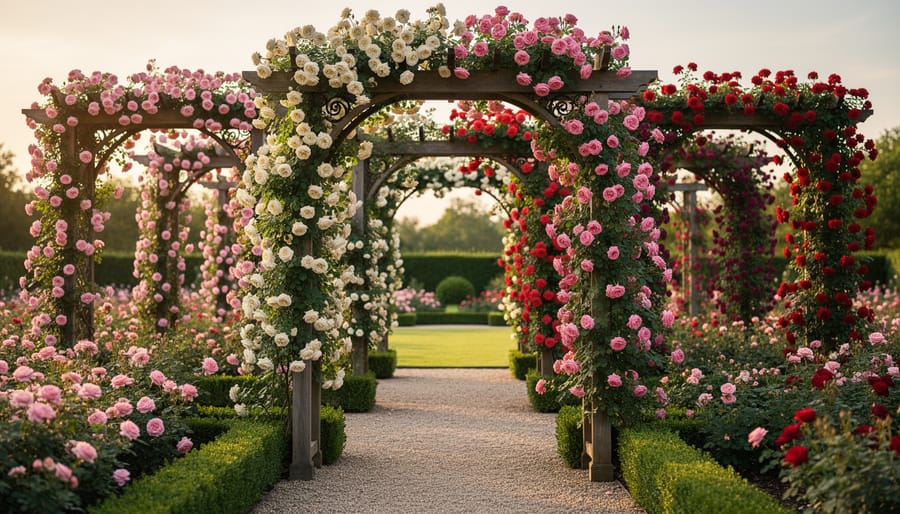
Transform your rose garden into a showstopper by incorporating vertical elements that draw the eye upward and maximize limited space. Arbors and trellises provide essential support for climbing roses while adding architectural interest that’s especially valuable during winter months here in Newburyport when blooms have faded.
Start by selecting sturdy structures that can handle mature climbing roses, which can become quite heavy. Position an arbor at garden entrances or along pathways to create an enchanting tunnel effect when roses are in full bloom. Wooden or metal trellises work beautifully against fences or walls, turning flat surfaces into stunning backdrops.
For New England gardens, choose cold-hardy climbers like ‘New Dawn’ or ‘William Baffin’ that can withstand our winters. Train young canes horizontally along the supports to encourage more blooms along the entire length rather than just at the tips. Secure stems gently with soft ties, checking them periodically as the plant grows.
Consider placing a bench beneath an arbor to create an inviting retreat where you can enjoy fragrant blooms overhead. These vertical features also provide opportunities to collect rose petals for sachets or potpourri, combining beauty with practical harvest.
Creating Focal Points
Every beautiful rose garden needs visual anchors that draw the eye and create moments of discovery. Think of focal points as destinations within your garden—places where visitors naturally pause to admire.
A classic birdbath positioned at the intersection of pathways makes a stunning centerpiece, especially when surrounded by fragrant David Austin roses. In Newburyport gardens, consider weathered stone or aged copper pieces that develop character through New England’s seasons.
Benches serve double duty as both functional seating and elegant focal points. Place one beneath an arbor covered with climbing roses, creating an inviting retreat where you can enjoy the blooms up close. Choose materials that complement your garden’s style—wrought iron for formal designs or rustic wood for cottage gardens.
Large containers filled with miniature or patio roses work beautifully as movable focal points. Position decorative urns at garden entrances or use matching pairs to frame a special rose variety.
Specimen plants also command attention. A standard rose (tree rose) with its lollipop shape creates instant drama, while a particularly stunning heirloom variety deserves solo placement where its unique qualities shine. These intentional design choices transform your rose garden from simply pretty to truly memorable.
Companion Planting for Depth and Interest
Perennials That Complement Roses
Pairing perennials with roses creates a garden that offers visual interest throughout the growing season while providing practical benefits for your roses. In New England’s climate, certain companion plants thrive beautifully alongside roses, extending your garden’s color and texture beyond the main bloom periods.
Lavender makes an excellent companion, with its silvery foliage and purple spikes creating stunning contrast against rose blooms. Both plants prefer similar well-drained soil conditions that work well in our region. Catmint offers another purple-hued option with a longer blooming period, filling gaps between rose flush cycles.
For softer textures, consider lady’s mantle, whose chartreuse blooms and scalloped leaves provide a lovely backdrop for roses. Salvia varieties bring vertical interest and attract beneficial pollinators to your garden. Coreopsis adds cheerful yellow flowers that complement warm-toned roses while tolerating New England’s variable weather.
Russian sage provides airy, late-season blooms when many roses are resting, and its drought tolerance suits Newburyport’s occasional dry spells. Geraniums (the hardy perennial type) offer ground-covering foliage that suppresses weeds while adding delicate flowers in pink, blue, or white.
When selecting companions, choose plants with similar sun and water requirements to your roses, ensuring everyone in your garden thrives together harmoniously.
Ground Covers and Low-Growing Options
Filling the space around your rose bases with ground covers creates a polished look while keeping weeds at bay—a win-win for any rose garden! These low-growing companions add texture and interest without competing with your roses for nutrients or attention.
Consider sweet alyssum, which forms delicate white or purple carpets that thrive in Newburyport’s coastal climate. This self-seeding annual spreads beautifully between roses and releases a honey-like fragrance on warm days. For perennial options, creeping thyme offers fragrant foliage and tiny flowers that attract beneficial pollinators, while lamb’s ear provides silvery texture that complements rose blooms wonderfully.
Low-growing sedums work exceptionally well in New England gardens, tolerating our temperature fluctuations and requiring minimal maintenance. Their succulent leaves create living mulch that keeps soil cool and moist during summer heat.
When selecting ground covers, choose plants that stay under 12 inches tall and spread horizontally rather than vertically. Avoid aggressive spreaders like periwinkle that might overtake your roses. Leave 6-8 inches of clear space around each rose’s crown to ensure proper air circulation and prevent disease issues. These understory plants create a cohesive garden bed while reducing your weeding time significantly, letting you focus on enjoying your beautiful roses instead!
Practical Layout Patterns for Rose Gardens
The Classic Formal Design
The classic formal rose garden brings timeless elegance to your landscape through deliberate structure and balance. This design style features symmetrical layouts where matching beds mirror each other across a central axis, creating visual harmony that never goes out of style. Think of geometric shapes—squares, rectangles, and circles—defined by low boxwood hedges or neatly edged borders.
Structured pathways are essential to this approach. Gravel or brick walkways intersect at right angles, often meeting at a central focal point like a fountain, sundial, or specimen rose standard. These paths don’t just look beautiful; they provide practical access for maintenance and allow you to admire your roses from every angle.
For Newburyport gardeners, this formal design works wonderfully in both front yards and larger backyards. Choose rose varieties with consistent heights and bloom patterns to maintain the organized appearance. Hybrid teas and grandifloras excel in formal beds, while miniature roses can edge pathways with precision.
The structured nature of this design makes deadheading and collecting petals for creative projects like potpourri or natural dyes particularly convenient. Start small with one symmetrical bed to master the technique before expanding your formal rose sanctuary.
Cottage Garden Romance
For a relaxed, welcoming aesthetic, the cottage garden approach beautifully showcases roses in their most natural setting. This informal style embraces controlled chaos, where roses mingle freely with perennials like lavender, catmint, and delphiniums. Plant your roses in clusters rather than formal rows, allowing companion plants to weave between them. English roses and old garden varieties work wonderfully here, as their softer forms complement the billowing nature of cottage plantings. In Newburyport’s climate, consider pairing your roses with hardy geraniums and salvia that bloom alongside them. The key is layering heights and textures—tall foxgloves behind climbing roses, mid-height peonies beside shrub roses, and low-growing sweet alyssum tumbling along pathways. Don’t worry about perfect symmetry; instead, let pathways curve naturally and allow self-seeding annuals to fill gaps. When roses finish blooming, collect those precious petals for sachets or natural dyes. This generous, overflowing style creates an inviting garden that feels established and loved, perfect for gardeners who appreciate beauty with a relaxed maintenance approach.
Modern Minimalist Approach
Modern minimalism transforms rose gardens into serene outdoor retreats through thoughtful restraint. This approach emphasizes clean geometric lines and generous negative space between plantings, allowing each rose to shine as a sculptural element. Choose a limited color palette of two to three coordinating hues—perhaps classic white blooms paired with soft blush tones, or dramatic deep reds against cream varieties. Rectangular raised beds with crisp edges create striking contemporary frames for your roses, while symmetrical spacing between plants reinforces the orderly aesthetic. In Newburyport’s coastal climate, hardy varieties like Knock Out roses or shrub roses work beautifully in minimalist designs, requiring less maintenance while maintaining their architectural presence. Gravel pathways and simple steel or concrete edging complement the uncluttered look, directing attention to the roses themselves rather than busy ornamentation. This design philosophy proves particularly effective in smaller urban gardens where every element counts.
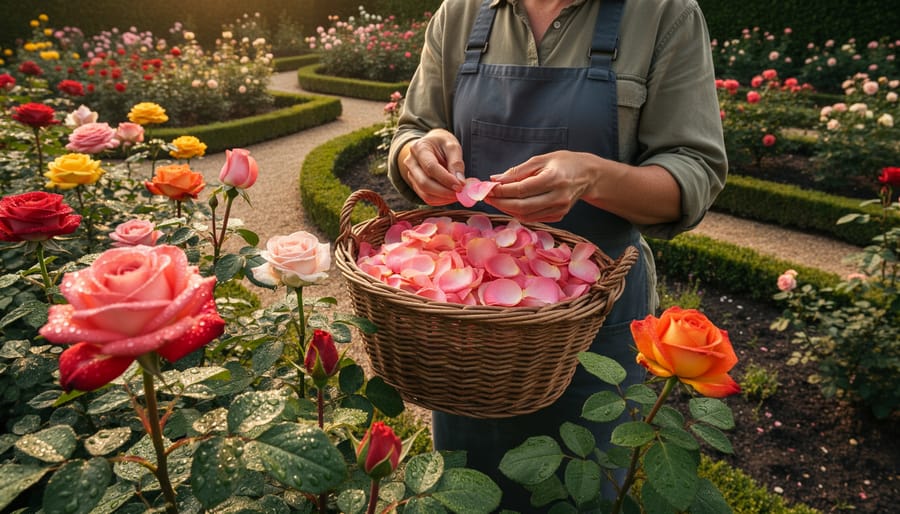
Creative Uses for Rose Petals in Your Garden Design
When designing your rose garden, consider planning for the wonderful bonus that comes with every bloom: the petals themselves! By incorporating petal harvesting into your garden design from the start, you’ll create a dual-purpose space that’s both beautiful to look at and productive throughout the growing season.
Position your most fragrant varieties like ‘Gertrude Jekyll’ or ‘Heritage’ roses along pathways where you can easily access blooms for harvesting. This strategic placement makes it simple to snip spent flowers before they fade, capturing petals at their peak fragrance and color. In Newburyport’s climate, plan for successive blooming by including both early and late-season varieties, ensuring a steady supply of fresh petals from June through October.
Design dedicated cutting areas within your rose garden where harvesting won’t disrupt the visual display. A small section tucked behind showier specimens works perfectly for growing roses specifically intended for petal collection. These can be pruned more aggressively without affecting your garden’s curb appeal.
Fresh rose petals themselves become stunning design elements. Scatter them along garden pathways for special occasions, float them in birdbaths or water features, or use them to create natural mulch around the base of your roses, adding both visual interest and a lovely fragrance as you walk through your garden.
Consider incorporating a small drying station into your garden design—perhaps a decorative screen or trellis where you can hang small bundles of roses. This functional feature becomes an attractive focal point while serving the practical purpose of preserving petals for winter crafts, potpourri, or culinary adventures. Planning for petal use from the beginning transforms your rose garden into a truly multifunctional outdoor space.
Seasonal Considerations for Year-Round Appeal
A well-designed rose garden shouldn’t fade into obscurity once the blooms finish for the season. Creating year-round visual interest requires thoughtful planning, especially important for those of us gardening in New England’s challenging climate where winters can be particularly harsh.
Start by selecting rose varieties with multiple seasons of interest. Many roses produce stunning hips in fall that persist through winter, adding pops of orange and red against snow-covered landscapes. Rosa rugosa varieties are particularly reliable for this purpose and thrive in our coastal Newburyport climate. Consider shrub roses that develop attractive branching structures, creating sculptural elements even when dormant.
Layer your rose garden with companion plants that shine during different seasons. Spring-blooming bulbs like daffodils and tulips provide early color before roses leaf out. Fall-blooming perennials such as asters and sedums extend the garden’s appeal after rose season wanes. Evergreen shrubs or ornamental grasses add texture and movement throughout winter months, preventing your garden from looking barren.
| Season | Primary Tasks | Visual Interest |
|---|---|---|
| Spring | Prune, fertilize, plant bulbs | Early bulbs, emerging foliage |
| Summer | Deadhead, water, collect petals | Peak blooms, companion plants |
| Fall | Reduce watering, allow hips to form | Rose hips, autumn perennials |
| Winter | Protect tender varieties, plan improvements | Architectural branches, evergreens |
Don’t overlook structural elements that provide visual anchors year-round. Arbors, trellises, and decorative edging remain beautiful even when plants are dormant. A birdbath or garden sculpture becomes a focal point during sparse winter months. Strategic hardscaping choices ensure your garden maintains its bones and design integrity through all seasons, making it a destination in your landscape regardless of what’s currently blooming.
Your rose garden transformation begins today—and it doesn’t require a complete overhaul to make a meaningful difference. Whether you’re incorporating a border of miniature roses along your Newburyport walkway, adding a trellis for climbing varieties, or simply rearranging existing plants to create better visual flow, each thoughtful change contributes to a more beautiful outdoor space. Remember that garden design is never truly finished; it’s an evolving canvas that grows and changes with the seasons, rewarding you with new blooms and discoveries year after year.
The beauty of designing with roses lies in their remarkable versatility. A single well-placed miniature rose can brighten a container display, while a carefully planned bed can become the centerpiece of your entire landscape. Don’t feel pressured to implement every idea at once. Start with one area that excites you most, observe how it performs through a growing season, and build from there. Even seasoned gardeners in our New England climate continue learning and adjusting their approaches based on what thrives in their specific conditions.
As you nurture your roses and watch your design vision come to life, you’ll discover that the real joy comes not just from the spectacular blooms, but from the creative process itself. Enjoy experimenting with color combinations, gathering fragrant petals for homemade sachets, and creating a garden space that reflects your personal style. Your rose garden is waiting to flourish—so grab your gloves and let the transformation begin.