
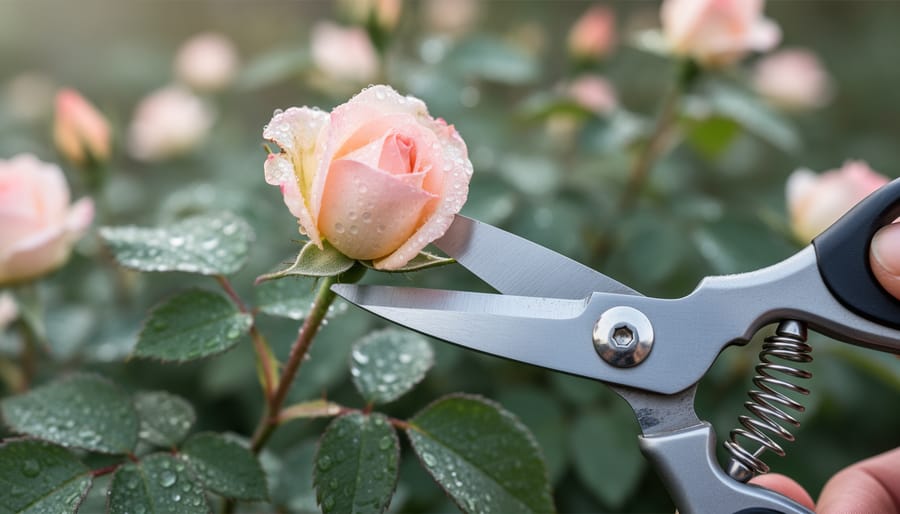
Precision cutting makes all the difference when you’re working with delicate blooms and tender stems. Gardening scissors are the secret weapon of successful miniature rose care offering controlled snips that shears and pruners simply can’t match. These specialized tools feature short, sharp blades designed for intricate work in tight spaces where larger cutting tools would damage neighboring buds or crush fragile growth.
Think of gardening scissors as the scalpel of your tool collection. While bypass pruners excel at thicker canes, scissors give you surgical precision for deadheading spent blooms, removing damaged leaves, and harvesting perfect petals for your next culinary project or craft arrangement. Here in Newburyport, where our coastal gardens demand careful attention to detail, I’ve watched countless growers transform their rose care routine once they discover the right pair.
The difference between adequate scissors and excellent ones comes down to blade quality, spring tension, and handle comfort. Cheap options might save you a few dollars initially, but they dull quickly and can actually harm your plants by creating ragged cuts that invite disease. Quality stainless steel blades maintain their edge through hundreds of cuts, while proper spring mechanisms reduce hand fatigue during extended pruning sessions.
Your miniature roses deserve tools that match their refinement. Whether you’re snipping away at aphid-damaged foliage or collecting pristine petals for rose water, the right scissors become an extension of your hand, letting you work with confidence and precision throughout the growing season.
What Makes Gardening Scissors Different From Regular Pruning Shears
At first glance, gardening scissors and pruning shears might seem interchangeable. They’re not. The difference matters significantly when you’re working with miniature roses, where a clumsy cut can damage weeks of careful cultivation.
Gardening scissors operate like traditional scissors, with two blades that slide past each other in a slicing motion. This design delivers exceptional precision, making them ideal for the delicate stems of miniature roses that rarely exceed pencil thickness. The slicing action produces clean cuts without crushing tissue, which is crucial for preventing disease entry points on small plants.
Pruning shears, by contrast, work with a bypass or anvil mechanism. Bypass pruners have one sharp blade that passes by a thicker counter-blade, generating more cutting force for woody stems up to three-quarters of an inch thick. They’re your tool for standard roses, shrubs, and older growth. Anvil pruners use a sharp blade that closes against a flat surface, effective for dead wood but potentially crushing on live, green stems.
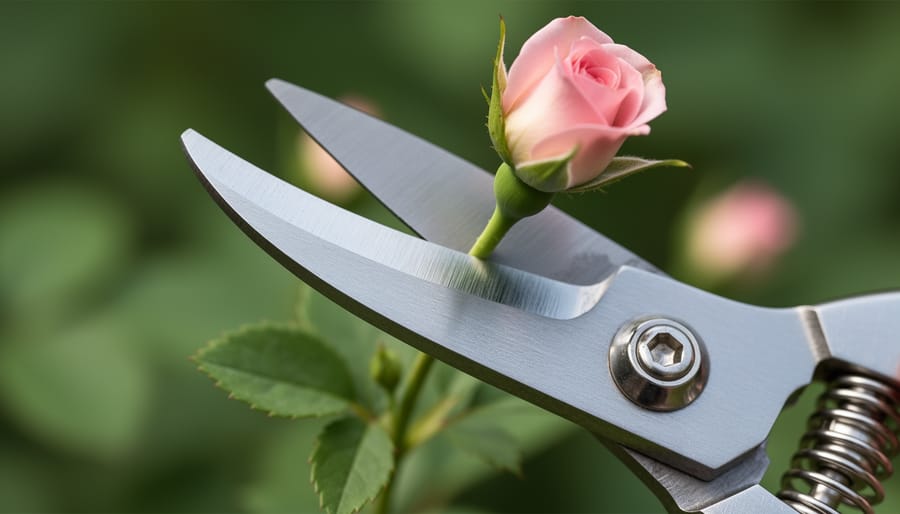
The blade tips tell another story. Gardening scissors typically feature fine, pointed tips that navigate between crowded miniature rose stems without damaging neighboring growth. Pruning shears have blunt, rounded tips designed for safety during forceful cuts on thicker branches.
For miniature rose enthusiasts, both tools have their place. Reach for gardening scissors when deadheading spent blooms, removing leaves spotted with blackspot, harvesting petals for your next potpourri batch, or making any cut on stems thinner than a drinking straw. Reserve pruning shears for spring pruning of the main canes, cutting back vigorous climbers, or tackling any woody growth that resists your scissors.
The miniature rose’s delicate structure demands the precision only gardening scissors provide for routine care. Think of them as your detail brushes, while pruning shears are the rollers.
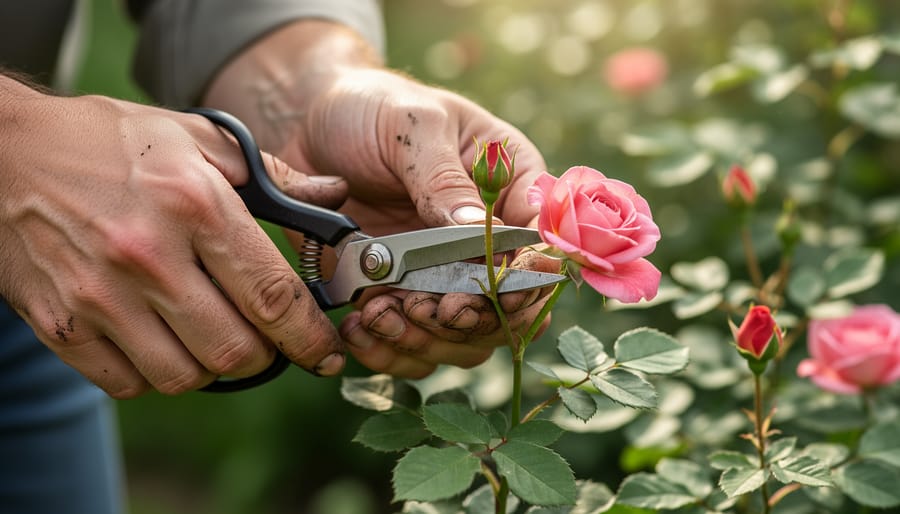
The Critical Features That Matter for Miniature Rose Care
Blade Material: Carbon Steel vs. Stainless Steel
Choosing between carbon steel and stainless steel blades is one of the most important decisions you’ll make when selecting gardening scissors for your miniature roses. Carbon tool steel scissors, like the Kaneshika Tool model at ¥3,740 JPY, are prized for their exceptional sharpness and edge retention. They take and hold a keener edge than stainless steel, making them ideal for precision cuts on delicate miniature rose stems. The trade-off? Carbon steel requires more attention. You’ll need to wipe the blades dry after each use and apply a light coat of oil to prevent rust, especially in Newburyport’s coastal humidity.
Stainless steel scissors offer convenience. They resist rust naturally, tolerate occasional neglect, and clean up quickly with just a rinse and dry. However, they won’t hold quite as sharp an edge as carbon steel, and you’ll notice they need resharpening more frequently during heavy pruning seasons. For weekend gardeners who prefer low-maintenance tools, stainless steel makes sense. Serious miniature rose enthusiasts who prune daily and don’t mind the extra care will appreciate carbon steel’s superior cutting performance and longevity.
Size and Ergonomics for Detailed Work
The 6.5-inch length has emerged as the sweet spot for miniature rose enthusiasts, and there’s solid reasoning behind this preference. Tools in this size range, like the VIVOSUN model currently promoted at $6.99, offer excellent control for navigating the tight spaces between miniature rose stems without overwhelming your hand during detailed work.
Hand fatigue becomes a real concern when you’re deadheading dozens of spent blooms or carefully shaping a collection of container-grown miniatures. Scissors that feel balanced in your palm, with handles sized for a natural grip rather than forcing your fingers into awkward positions, make a noticeable difference after 20 or 30 minutes of steady pruning. Look for models with slightly cushioned handles or finger loops that distribute pressure evenly.
Weight matters more than many gardeners initially realize. A tool that feels manageable for the first five cuts can become surprisingly tiresome when you’re working through an entire flat of miniature roses or maintaining the precise shapes that make these petite plants so charming. In Newburyport’s spring pruning season, when you might spend a full morning preparing your roses for their first flush, comfort becomes just as important as cutting precision.
How to Choose Gardening Scissors That Match Your Rose Garden Needs
Choosing scissors suited to your garden prevents buyer’s remorse and ensures your tools work as hard as you do. Start by honestly assessing your rose collection and how often you’ll reach for these scissors.
If you maintain fewer than a dozen miniature roses in containers or a small bed, budget-friendly options like the VIVOSUN 6.5 Inch Gardening Scissors deliver excellent value. Currently available at $6.99 during promotional periods (down from $9.99), these stainless steel scissors handle routine deadheading and light pruning without requiring the maintenance commitment of premium carbon steel tools. They’re particularly appealing for gardeners new to miniature roses who want reliable performance while learning proper technique.
For serious collectors managing 20 or more miniature rose plants, or those who prune daily during Newburyport’s peak growing season, investing in precision tools pays dividends. The Kaneshika Tool Carbon Tool Steel Gardening Scissors at ¥3,740 JPY (roughly $25 USD) represent professional-grade quality with blade edges that hold sharpness through hundreds of cuts. The carbon steel requires diligent cleaning and oiling, but dedicated rose enthusiasts appreciate the superior cutting action on mature woody stems.
Garden size matters too. Compact urban balconies with three potted miniature roses need just one versatile pair, whereas sprawling collections benefit from keeping multiple scissors handy: one at your potting bench, another in your garden tote, and a spare for harvesting rose petals without interrupting your pruning workflow.
Consider your physical comfort during extended sessions. Scissors with cushioned handles and spring-assisted opening reduce hand fatigue when you’re removing dozens of spent blooms on a Saturday morning. Test the grip if possible; your thumb and fingers shouldn’t strain to operate the blades smoothly.
Budget wisely but don’t chase the absolute cheapest option. Scissors that dull after two weeks or develop loose pivot points waste money. Mid-range quality ($15-30) typically delivers the sweet spot of durability and performance for committed miniature rose gardeners.
Essential Techniques: Using Your Scissors for Healthy Miniature Roses
Mastering proper cutting technique protects your miniature roses from disease and encourages vigorous new growth. The difference between a clean, healthy cut and a ragged wound often determines whether your plant channels energy into spectacular blooms or struggles to heal damaged tissue.
The fundamental technique for all pruning cuts involves a sharp 45-degree angle made about a quarter-inch above an outward-facing bud. This angled cut allows water to run off rather than pool on the cut surface, which reduces rot risk in Newburyport’s humid coastal conditions. Cuts made parallel to the bud encourage water retention and invite fungal infections. When you cut above outward bud eyes rather than inward ones, you shape the plant to grow outward, creating better air circulation through the center of the bush.
- Hold your scissors perpendicular to the stem with blades positioned at a 45-degree angle, slanting away from the bud.
- Position the cutting point one-quarter inch above a leaf node that has a healthy, outward-facing bud eye.
- Make a single decisive cut without twisting or sawing, which compresses stem tissue and creates entry points for disease.
- Check that the cut surface is clean and smooth with no torn fibers or crushing visible.
- Remove the severed stem immediately to prevent disease spores from landing on fresh cuts.
Deadheading spent blooms serves a different purpose than structural pruning. When you deadhead to encourage rebloom cut back to the first set of five leaflets rather than stopping at three-leaflet sets, which produces stronger new flowering stems. This practice matters throughout both early growth care and later stage care phases when your miniature roses are actively blooming.
Removing diseased foliage demands immediate attention. Cut below any spotted, yellowed, or damaged leaves and collect all clippings in a bag rather than leaving them on the ground, where fungal spores can overwinter. Disinfect your scissor blades between cuts on infected plants by dipping them in a 10% bleach solution.
For harvesting rose petals to use in potpourri or culinary projects, cut blooms in the morning after dew has dried but before afternoon heat wilts petals. Snip stems at the same 45-degree angle above a five-leaflet node to maintain plant vigor while gathering materials for creative uses.
Maintenance That Keeps Your Scissors Sharp and Reliable
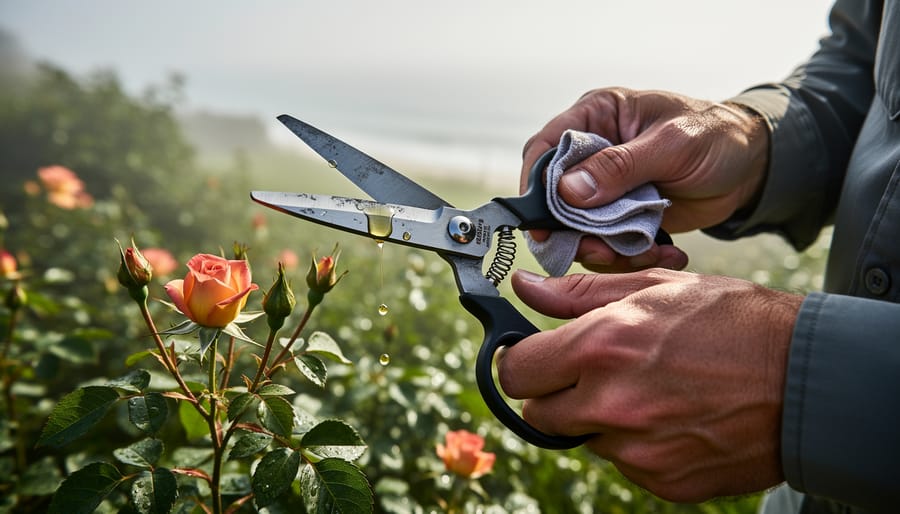
Your gardening scissors will serve your miniature roses faithfully for years if you establish a simple care routine after each session. Rinse the blades with water to remove sap, petal fragments, and soil particles that accumulate during pruning. Dry them thoroughly with a soft cloth, paying special attention to the pivot point and blade edges. This step is non-negotiable for carbon steel models like the Kaneshika scissors, which will develop rust spots if left damp, particularly in Newburyport’s salt air.
After drying, apply a thin coat of camellia oil or mineral oil to the blades and pivot mechanism. This protective layer prevents oxidation and keeps the action smooth. Run the scissor blades open and closed several times to work the oil into the joint. Store your scissors in a dry location rather than leaving them in a garden shed where humidity fluctuates.
Sharpening depends on use frequency. If you deadhead and prune daily during the growing season, plan to sharpen every four to six weeks. For occasional users, twice yearly suffices. You can use a fine diamond file or whetstone, maintaining the original blade angle (typically 20-25 degrees) with smooth, consistent strokes from base to tip. Some gardeners prefer professional sharpening services to preserve the factory edge.
When winter arrives, clean and oil your scissors one final time before storage. Wrap carbon steel blades in an oiled cloth or place them in a sealed container with silica gel packets to combat coastal moisture. This prevents the disappointment of unwrapping rusty tools come spring when your miniature roses need their first shaping of the new season.
Beyond Pruning: Creative Uses for Your Gardening Scissors
Your precision gardening scissors deserve more credit than just deadheading and pruning. Once you’ve mastered the basics of miniature rose care, these versatile tools become your gateway to creative projects that extend your garden’s beauty far beyond the beds.
Harvesting rose petals is where your scissors truly shine. Those precise, sharp blades let you snip individual petals at peak freshness without bruising delicate tissue, preserving the vibrant colors and natural oils that make miniature rose petals so valuable. When you use rose petals for projects, clean cuts matter. Torn or crushed petals oxidize faster, losing their fragrance and turning brown within hours.
The creative possibilities multiply once you start collecting petals with intention:
- Potpourri blends that capture your garden’s signature scent
- Culinary garnishes for cakes, salads, and cocktails
- Natural dyes for fabric and paper crafts
- Rose water and infused oils for skincare
- Pressed flower art using perfectly intact petals
Your scissors also excel at assembling miniature rose bouquets, where a single clumsy cut ruins the arrangement. The compact blade size navigates tight spaces between stems in mixed containers, letting you trim back overgrown thyme or trim trailing lobelia without disturbing neighboring miniature roses. In Newburyport’s coastal gardens, where space runs premium and mixed plantings thrive, this precision prevents the domino effect of accidental damage that larger shears cause in crowded pots.
Choosing quality gardening scissors isn’t just about owning another tool. It’s about respecting the craft of rose care and giving your miniature roses the precision they deserve. Whether you invest in carbon steel blades at ¥3,740 or start with a budget-friendly option at $6.99, match your choice to how seriously you take your gardening. Sharp, well-maintained scissors make cleaner cuts, promote faster healing, and reduce disease risk in those delicate stems.
Your miniature roses will reward careful tool selection with healthier growth and more abundant blooms. The difference between hacking at stems with dull blades and making precise 45-degree cuts shows up in your garden’s performance throughout the season.
Here in Newburyport, we’ve spent years perfecting miniature rose care techniques, and we’re always eager to share what works. Whether you’re just starting your rose journey or refining your skills, Nor-East Miniature Roses offers guidance rooted in coastal New England experience. Your scissors are just the beginning of a rewarding relationship with these remarkable plants.